The right bathroom floor tile idea depends on three things: the size of the room, the finish sheen, and your budget per square foot, not just the tile you like in a showroom photo. A large-format porcelain tile that looks great in a 200 square foot primary bathroom can make a 40 square foot powder room feel like a hallway if the layout and grout lines are not planned around the smaller footprint. This guide breaks down real tile ideas by style, size, and price, with the specific formats, finishes, and layouts that hold up in San Diego's bathrooms.
We install porcelain, ceramic, and natural stone tile in bathrooms across San Diego County, and most of the design questions we get on an in-home estimate are variations on the same handful of choices covered here: large-format versus mosaic, matte versus glossy, and how to make a small bathroom read bigger without spending more per square foot. If your bathroom also needs new subfloor prep or waterproofing, our bathroom flooring installation guide covers that process in detail.
Want to see tile samples in your own bathroom's lighting? Request a free in-home estimate or call +1 (619) 777-4334.
Large-Format Porcelain Tile Ideas
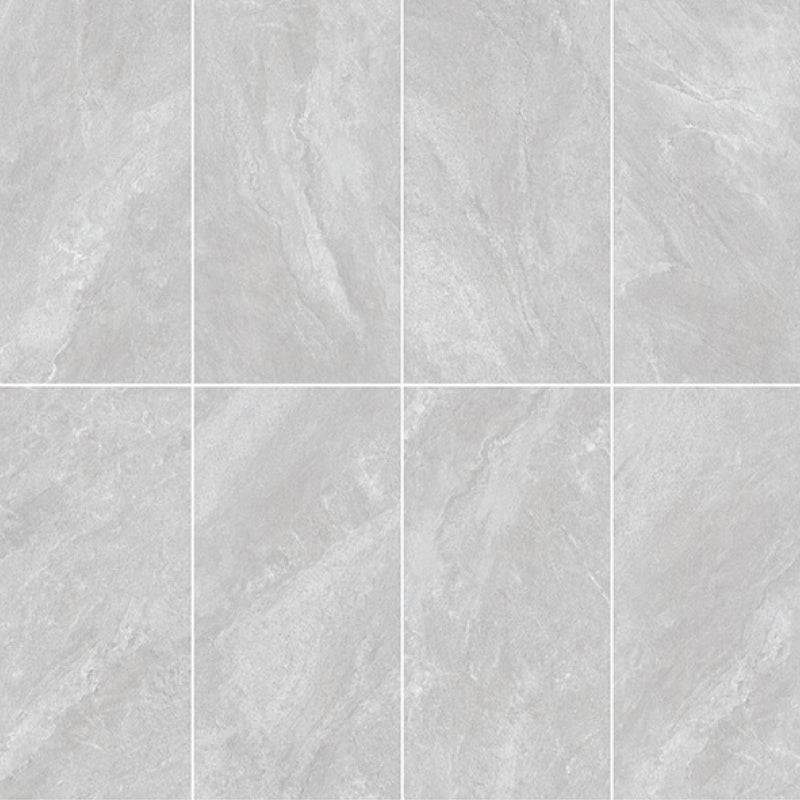
Large-format porcelain, generally 12x24 inches or bigger, is the most requested bathroom floor style we install in 2026. Fewer grout lines read as cleaner and more modern, and a 24x24 or 24x48 tile in a small bathroom can actually make the room look larger, since the eye is not tracking a dense grid of grout every few inches. Popular looks include calacatta-style marble veining, warm travertine patterns, and solid concrete-look gray tones with a subtle texture.
The tradeoff is installation. Large-format tile needs a flatter subfloor than small tile, since anything more than 1/8 inch of deflection over 10 feet will telegraph as lippage (an uneven edge between two tiles) across a bigger surface. We check the subfloor with a straightedge and level it with self-leveling compound before setting any tile over 12x24, which adds $2 to $4 per square foot to the job but prevents cracked grout and edge chipping down the line.
Large-format tile also needs back-buttering (troweling thinset onto the back of the tile in addition to the floor) to get full mortar coverage, since a hollow spot under a big tile is more likely to crack under foot traffic than the same hollow spot under a 6x6 tile. This is a standard step for any installer following Tile Council of North America (TCNA) large-format tile guidelines, and it is worth asking about directly when you get quotes.
Wood-Look Plank Tile for Warmth
Wood-look porcelain plank is the top pick for homeowners who want a hardwood look in a room where real hardwood cannot go. Modern printing technology gives each plank a distinct grain pattern (no visible repeat every third or fourth tile, which was a common giveaway a decade ago) and an embossed texture that matches the printed grain groove for groove, often called embossed-in-register.
Planks typically run 6 to 9 inches wide and 24 to 48 inches long, close to real hardwood dimensions, and are laid in a running bond (staggered) or herringbone pattern. Herringbone in particular is one of the most requested bathroom floor upgrades right now, especially in primary bathrooms, though it adds 15 to 25 percent to labor cost because of the extra cutting involved at each angle.
Wood-look tile pairs well with a warm-toned vanity and matte black or brushed brass fixtures, and it is a natural extension if the adjoining bedroom has real engineered hardwood, since the visual transition at the doorway reads almost seamless even though the materials are different.
Mosaic and Pebble Tile for Shower Pans
Small mosaic tile, typically 1x1 or 2x2 inch pieces mounted on mesh sheets, and natural pebble tile remain the standard choice inside a shower pan itself, even in a bathroom that uses large-format tile everywhere else. The reason is structural, not just aesthetic: a shower pan needs a slope of about 1/4 inch per foot toward the drain, and small individual tiles can follow that slope with dozens of grout lines instead of trying to bend or cut a large rigid tile to match a curved plane.
Pebble tile adds texture underfoot, which some homeowners like for slip resistance and a spa-like feel, though it takes slightly more scrubbing to keep grout clean between the uneven stones. A polished or honed mosaic in glass or porcelain gives a cleaner, more contemporary look with a flatter (though still textured) walking surface. Both options typically run $10 to $22 per square foot installed, higher than the field tile, because of the extra labor to maintain slope and seal the additional grout lines.
For the shower pan waterproofing itself, we follow standard wet-area membrane practices (Schluter-DITRA or a liquid-applied system like RedGard) regardless of which mosaic or pebble style is chosen; the tile is the visible layer, but the membrane underneath is what actually keeps water out of the subfloor.
How Do You Make a Small Bathroom Floor Look Bigger?
Three choices matter most in a small bathroom (powder rooms and hall baths under 40 square feet are common in San Diego's older housing stock): tile size, color, and grout line color. Large tile with fewer grout lines almost always reads bigger than small tile in a small room, even though it seems counterintuitive to use big tile in a tight space. A 12x24 or larger tile laid in a single continuous direction gives the eye fewer stopping points than a grid of 12x12 or smaller tiles.
Light colors do more visual work than pattern in a small bathroom. A light gray, warm white, or soft beige tile reflects more light back into the room, while a dark tile, however striking in photos, absorbs light and can make an already-small room feel like it is closing in, especially in a windowless powder room lit only by a vanity fixture.
Grout color matters more in a small room too. Matching the grout closely to the tile color removes the visual grid entirely and reads as one continuous surface, which is the single easiest way to make a small bathroom floor look larger without changing the tile itself. A high-contrast grout (dark grout with light tile) does the opposite, since it emphasizes every seam and visually shrinks the room.
Matte vs Glossy, Which Finish Is Better for a Bathroom Floor?
Matte and low-luster finishes are both safer and more practical for bathroom floors than high-gloss tile, and they are also the dominant style trend in 2026. A glossy floor tile shows water spots, soap scum, and every footprint far more visibly than matte, and it is measurably more slippery when wet, which matters directly in a room where the floor gets wet daily.
| Finish | Slip Resistance Wet | Shows Water Spots | Best Use |
|---|---|---|---|
| Matte / honed | Higher traction | Minimal | Full bathroom floors, shower pans |
| Textured / lightly rippled | Highest traction | Minimal | Shower floors, tubs with young kids or seniors in the home |
| Glossy / polished | Lower traction | Shows every spot | Walls, backsplashes, accent niches only |
Tile slip resistance is measured by a coefficient of friction (COF) rating, and most manufacturers now list a wet COF rating on the spec sheet for floor-rated tile. We generally recommend a wet COF of 0.60 or higher for any bathroom floor and shower pan, which rules out most polished or high-gloss tile for anywhere water pools underfoot. Reserve glossy tile for vertical shower walls or a decorative niche where standing water is not a concern.
Bathroom Tile Ideas by Budget Tier
Costs below are for tile and installation only, based on a standard 50 square foot bathroom floor, and do not include waterproofing membrane or subfloor repair (typically another $200 to $500, covered in our bathroom installation cost guide).
| Budget Tier | Tile Type | Installed Cost/sqft | 50 sqft Total |
|---|---|---|---|
| Value | Standard ceramic, 12x12 or 12x24 | $6.00 - $9.00 | $300 - $450 |
| Mid-range | Large-format porcelain, wood-look plank | $9.00 - $14.00 | $450 - $700 |
| Upgraded | Designer porcelain, herringbone layout, mosaic accent | $14.00 - $20.00 | $700 - $1,000 |
| Premium | Natural stone (marble, travertine, slate) | $18.00 - $28.00 | $900 - $1,400 |
Natural stone carries a hidden ongoing cost too: it needs sealing every 12 to 18 months to stay water and stain resistant, while porcelain never needs sealing at all. If budget is the deciding factor and you still want a stone look, wood-look or stone-look porcelain gets you 80 to 90 percent of the visual effect at roughly half the material cost and none of the sealing maintenance. We install all of these across San Diego County, including La Jolla and Coronado, where natural stone in coastal, humid bathrooms still needs the same sealing schedule as anywhere else.
Grout Color and Layout Patterns That Change the Look
The same tile can look like two completely different bathrooms depending on the grout color and layout pattern chosen. A straight-lay grid pattern is the standard, lowest-labor-cost layout. A running bond (bricklike, staggered by half a tile) costs about the same but reads slightly more custom. Herringbone and chevron cost 15 to 25 percent more in labor due to the angled cuts at every edge, but they turn a basic tile into a focal-point floor, especially in a shower pan or a small powder room where the whole floor is visible at once.
Grout color falls into three practical categories: matching (grout within one or two shades of the tile, minimizes the grid and reads as one surface), contrasting (grout noticeably darker or lighter than the tile, emphasizes the layout pattern and tile shape), and gray or greige as a neutral middle ground that hides dirt better than pure white grout without creating strong contrast. Sanded grout is used for joints 1/8 inch or wider; unsanded grout is used for joints narrower than that, and using the wrong one for the joint width is one of the most common causes of grout cracking we see when we tear out a failed bathroom floor.
For anyone comparing tile against other bathroom-safe materials before deciding, our tile vs vinyl flooring comparison breaks down where waterproof LVP might actually be the better call outside the shower pan itself.
Frequently Asked Questions
What Is the Most Popular Bathroom Floor Tile Right Now?
Large-format porcelain tile, 12x24 inches or bigger, in a matte finish is the most requested bathroom floor tile in 2026, often in a marble-look or concrete-look pattern. Wood-look porcelain plank is the second most popular choice for homeowners who want warmth without sacrificing water resistance.
What Size Tile Is Best for a Small Bathroom?
Large tile, 12x24 inches or bigger, generally makes a small bathroom look bigger than small tile does, since fewer grout lines create fewer visual stopping points for the eye. Laying the tile in a single continuous direction, rather than a grid pattern, adds to the effect.
Should Bathroom Floor Tile Be Matte or Glossy?
Matte or low-luster finishes are better for bathroom floors than glossy tile. Matte tile hides water spots and soap scum better, and it has more slip resistance when wet, which matters directly in a room where the floor gets wet daily.
What Tile Is Best for a Shower Floor?
Small mosaic tile (1x1 or 2x2 inch pieces on mesh sheets) or natural pebble tile is standard for shower floors, since small individual pieces can follow the required 1/4 inch per foot slope toward the drain. Large-format tile is difficult to slope correctly inside a shower pan.
Is Wood-Look Tile a Good Choice for a Bathroom Floor?
Yes. Wood-look porcelain plank gives the visual warmth of hardwood with full water resistance, which real hardwood cannot offer in a bathroom. It is one of the most requested bathroom floor styles for homeowners who want their bathroom to visually match an adjoining hardwood room.
How Much Does Bathroom Floor Tile Cost Per Square Foot?
Installed bathroom floor tile typically runs $6 to $9 per square foot for standard ceramic, $9 to $14 for large-format or wood-look porcelain, and $18 to $28 for natural stone like marble or travertine. Costs do not include waterproofing membrane, which adds roughly $200 to $500 to a standard 50 square foot bathroom.
What Grout Color Is Best for a Bathroom Floor?
Grout matched closely to the tile color minimizes the visual grid and works well in small bathrooms. Gray or greige grout is a practical middle ground that hides dirt better than white grout without the strong contrast of a dark grout against a light tile.
Is Herringbone Tile a Good Idea for a Bathroom?
Yes, herringbone remains one of the most requested bathroom floor upgrades in 2026, particularly with wood-look plank tile in primary bathrooms. It costs 15 to 25 percent more in labor than a straight-lay pattern because of the additional angled cuts required at each edge.
Do I Need Different Tile for the Shower Pan Than the Rest of the Bathroom Floor?
Usually yes. Most bathrooms use large-format or wood-look tile on the main floor and a small mosaic or pebble tile inside the shower pan itself, since the smaller tile can follow the slope to the drain that a large rigid tile cannot bend to match.