
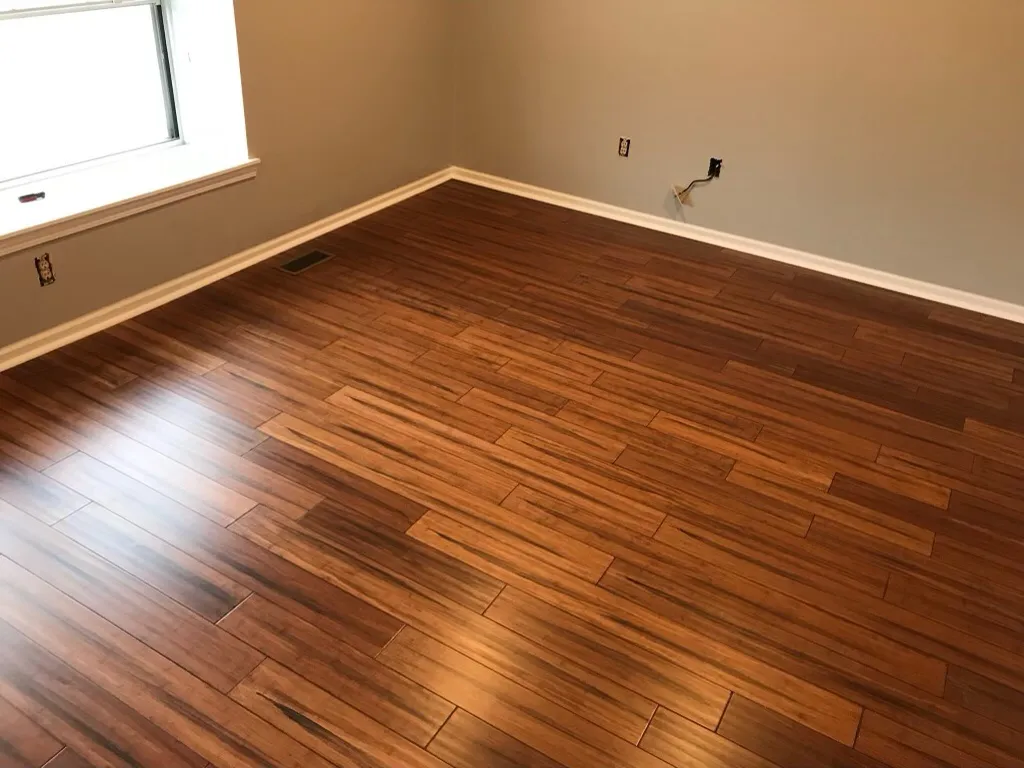
The best flooring for new construction homes is rigid-core luxury vinyl plank (LVP) for whole-home durability, engineered hardwood for main living areas, and water-resistant laminate as a budget alternative. New construction flooring comes with one problem a renovation never has: a fresh concrete slab that is still releasing moisture. Get the timing and product choice wrong and you can end up with a cupped or lifted floor within the first two years. Our luxury vinyl plank and hardwood flooring pages cover pricing and brands; this guide covers what actually matters for a new build.
Builders and buyers approach flooring for new construction differently than a remodel. Builders want a fast, low-cost product that gets the home to closing. Buyers often want to upgrade the builder-grade allowance to something that will last. Both decisions come back to the same starting point: how long the slab has had to cure and dry, and what that means for which products are safe to install now versus later.
- Best overall: Rigid-core LVP (SPC) - waterproof, slab-stable, install-ready as soon as moisture testing clears
- Best real wood: Engineered hardwood - needs a longer moisture window than LVP, worth the wait in living and dining rooms
- Best budget upgrade: Water-resistant laminate (AC4+) - close to hardwood look at a lower installed cost
- Slab dry time before wood or laminate: typically 60 to 90+ days after pour, confirmed by testing, not a calendar guess
- Avoid on a new slab under 60 days old: solid hardwood and any wood or laminate product without a passed moisture test
Building or buying new construction? Request a free in-home estimate or call +1 (619) 777-4334.
Why New Construction Flooring Is Different
A renovation has an existing subfloor that has already dried out over years of normal living. New construction flooring goes down over a slab or subfloor that may be weeks old, and concrete keeps releasing moisture vapor for months after the pour. Installing wood, laminate, or even some adhesives too early traps that moisture under the floor, where it causes cupping, buckling, or adhesive failure that will not show up for a year or two.
The fix is not a calendar guess. It is a calcium chloride (CaCl) test or an in-situ relative humidity (RH) probe test, done on the actual slab in the actual rooms. A slab reading under 3 lbs per 1,000 sqft per 24 hours on a CaCl test, or under 75% RH on a probe test, is generally considered safe for wood and laminate over a proper vapor barrier. Rigid-core LVP has more tolerance for a slightly damp slab, which is one reason it is the most common new-construction flooring choice.
The Best Flooring Options for New Construction, Ranked
| Flooring Type | Best For | Slab Moisture Tolerance |
|---|---|---|
| Rigid-core LVP (SPC) | Whole home, kitchens, baths | High, tolerates a damp slab better than any other option |
| Engineered hardwood | Living rooms, dining rooms, primary bedroom | Moderate, needs a passed moisture test and vapor barrier |
| Water-resistant laminate | Budget-conscious whole-home installs | Moderate, same testing requirement as hardwood |
| Porcelain tile | Bathrooms, laundry, entry | High, unaffected by residual slab moisture |
| Solid hardwood | Not recommended on a new slab | Low, needs the longest dry time and is the least forgiving if testing was skipped |
For most new-construction projects we recommend rigid-core LVP throughout the main level, since it handles slab moisture, foot traffic during move-in, and the inevitable scuffs from furniture delivery better than anything else. See our vinyl plank flooring page for the specific products we install. Engineered hardwood is worth the extra step of a full moisture test in rooms where you want a real-wood floor, covered in more depth on our hardwood flooring page.
What Builders Install as Base-Grade Flooring
Most production builders include a flooring allowance in the base price, usually $2 to $4 per square foot in materials only. That budget typically buys builder-grade carpet in bedrooms and a thin, entry-level laminate or sheet vinyl everywhere else. It is not bad flooring, but it is chosen to hit a price point, not to last 20 years.
Upgrading before move-in is almost always cheaper than replacing after move-in. Once you are living in the home, an upgrade means moving furniture, working around your schedule, and re-testing a slab that has now had years of normal use on top of it. Upgrading during the construction window means an empty house, direct access, and a slab that is often better documented from the builder's own testing.
Timing Flooring Installation Around Other Trades
Flooring sits in a specific spot in the construction sequence, and getting it out of order causes real damage. The typical order on a new build is: framing, drywall, paint (or at least a primer coat), cabinets, flooring, then baseboards and trim. Cabinets generally go in before flooring so the floor is not scuffed by heavy cabinet installation and so material is not wasted covering square footage that will sit under a cabinet toe-kick anyway.
Flooring goes down after paint to avoid drips and after cabinets for the reasons above, but before baseboards and trim so the trim covers the expansion gap along the wall. If your builder or contractor proposes installing flooring before paint is finished, or before cabinets are set, that is worth questioning. It usually means either rework later or a compromise on the finished look.
Cost to Upgrade Builder-Grade Flooring
| Upgrade | Installed Cost per Sqft | 1,800 Sqft Home |
|---|---|---|
| Builder-grade carpet or thin laminate (baseline) | $2.00 - $4.00 | $3,600 - $7,200 |
| Rigid-core LVP upgrade | $5.00 - $8.00 | $9,000 - $14,400 |
| Water-resistant laminate upgrade | $4.50 - $7.00 | $8,100 - $12,600 |
| Engineered hardwood upgrade (main areas only) | $8.00 - $12.00 | $6,400 - $9,600 (900 sqft main level) |
The net cost to go from builder-grade to a durable rigid-core LVP throughout an 1,800 sqft home typically runs $5,000 to $10,000 more than the baseline allowance, depending on product tier and how much of that allowance you can apply as a credit. According to the National Association of Home Builders (NAHB), flooring consistently ranks among the features new-home buyers are most likely to upgrade before closing, which tracks with what we see on new-construction jobs across San Diego County.
When Should Flooring Be Installed in New Construction
Flooring should go in after drywall, paint, and cabinets are finished, and only after the slab has passed a moisture test, typically 60 to 90 days after the pour. Installing earlier risks trapping moisture under wood or laminate. Rigid-core LVP has the most flexibility if the schedule is tight and moisture readings are still borderline.
Frequently Asked Questions
What Flooring Is Best for a Brand New House?
Rigid-core luxury vinyl plank is the best all-round flooring for a brand new house because it tolerates residual slab moisture better than wood or laminate and holds up well to move-in traffic. Engineered hardwood is a strong choice for main living areas once a moisture test confirms the slab is dry enough.
How Long Should a New Slab Dry Before Flooring Goes Down?
Most concrete slabs need 60 to 90 days or more to dry enough for wood or laminate flooring, though the only reliable way to know is a calcium chloride or relative humidity probe test on the actual slab. Rigid-core LVP is more forgiving and can often go down sooner if a full moisture test is not yet complete.
Can You Install Hardwood Floors in New Construction?
Yes, but only after the slab passes a moisture test and with a proper vapor barrier in place. Engineered hardwood is the safer choice over solid hardwood in new construction because its layered core handles the moisture swings of a curing slab better.
Is Builder-Grade Flooring Worth Upgrading?
Usually, yes. Builder-grade flooring is typically chosen to hit a $2 to $4 per square foot allowance, not to last decades. Upgrading before move-in, while the home is empty and easy to access, is almost always less expensive and less disruptive than replacing it after you are living there.
Should Flooring Be Installed Before or After Cabinets?
Cabinets are typically installed before flooring. This protects the finished floor from damage during cabinet installation and avoids paying to cover square footage that will sit under cabinet toe-kicks. Flooring then goes down before baseboards and trim so the trim hides the expansion gap.
What Flooring Do Most Builders Use as Standard?
Most production builders include entry-level carpet in bedrooms and a thin laminate or sheet vinyl in other rooms as their standard, base-price flooring allowance. It is functional but not built for long-term durability, which is why most buyers choose to upgrade before or shortly after closing.
Does Upgrading Flooring in New Construction Add Resale Value?
Yes. Engineered hardwood and quality rigid-core LVP both read as upgrades to buyers and appraisers compared to builder-grade carpet or thin laminate. Hardwood in particular tends to hold its value best over time, similar to what we see in resale data for existing San Diego homes.
How Do I Know If My New Home's Slab Is Dry Enough for Flooring?
Ask for a calcium chloride test result under 3 lbs per 1,000 sqft per 24 hours, or a relative humidity probe reading under 75%. Both are standard, inexpensive tests that any qualified flooring contractor can run before installation begins.