
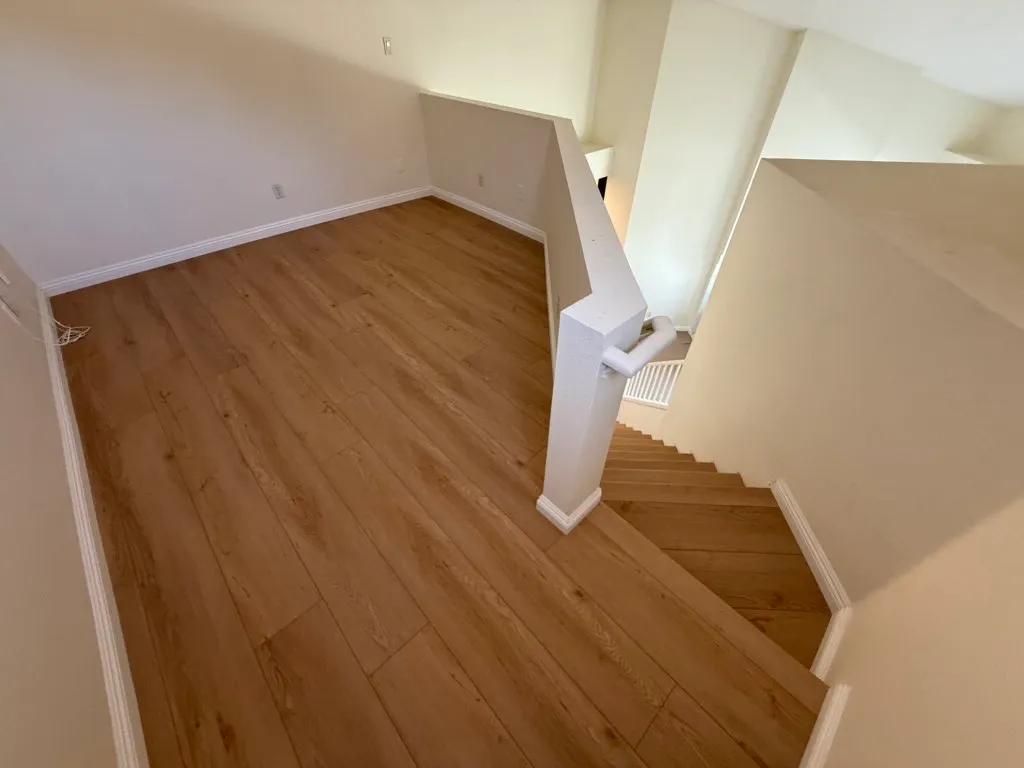
Luxury vinyl plank (LVP) is cheaper, fully waterproof, and lower-maintenance, while engineered hardwood is real wood that adds more resale value and can sometimes be refinished. Both install over concrete slab, which matters in San Diego, and both look like wood. The choice comes down to priorities: pick LVP for waterproofing, budget, and pets, and pick engineered hardwood when you want genuine wood underfoot and the long-term home value that comes with it. See our vinyl plank and hardwood flooring service pages for what we install in San Diego homes.
- Waterproof: LVP yes, engineered hardwood no (water-resistant)
- Material: LVP is plastic; engineered is real wood veneer over plywood
- Cost: LVP $4 to $9, engineered hardwood $8 to $15 per sq ft installed
- Refinishing: LVP cannot; thick-veneer engineered can once or twice
- Resale value: Engineered hardwood adds more
- Best for pets and wet rooms: LVP
Still weighing wood versus vinyl? Request a free in-home estimate or call +1 (619) 777-4334.
The Quick Verdict
If you want a worry-free, waterproof floor for a busy home with kids or pets, or you are working to a tighter budget, LVP is the practical winner. If you want the look, feel, and resale value of real wood and you are willing to baby it a little, engineered hardwood is worth the extra cost. Both are smart over San Diego slab foundations, where solid hardwood struggles. For how engineered compares to solid wood, see our engineered vs solid hardwood guide.
LVP vs Engineered Hardwood, Side by Side
| Feature | Luxury Vinyl Plank | Engineered Hardwood |
|---|---|---|
| What it is | Waterproof plastic core, printed wood look | Real wood veneer over a plywood core |
| Water resistance | 100% waterproof | Water-resistant, not waterproof |
| Installed cost | $4 to $9 per sq ft | $8 to $15 per sq ft |
| Refinishing | No | Yes, with a 3mm+ veneer |
| Feel | Softer, warmer, slightly hollow | Solid, authentic real-wood feel |
| Resale value | Neutral to slight positive | Strong positive |
| Lifespan | 15 to 25 years | 25 to 40+ years |
| Best for | Kitchens, baths, pets, budgets | Living areas, resale, real-wood lovers |
Water and Durability
LVP is unbothered by water, which makes it the safe choice for kitchens, bathrooms, laundry rooms, and homes with pets. Engineered hardwood handles humidity far better than solid wood thanks to its cross-ply core, but standing water and the seams between boards are still a weak point, so it is not a wet-room floor. For scratch resistance, both do well; LVP shrugs off claws better, while a quality hardwood finish resists everyday wear and can be refreshed later.
Cost
LVP runs $4 to $9 per square foot installed, while engineered hardwood runs $8 to $15. Over a whole home that gap is significant. The trade is longevity and value: engineered hardwood lasts longer and a refinishable floor can be renewed instead of replaced. For full LVP pricing, see our vinyl plank flooring cost guide.
Resale Value and Refinishing
Real wood still carries weight with buyers, so engineered hardwood adds more resale value than LVP. It can also be sanded and refinished once or twice if it has a 3mm or thicker wear layer, which means a tired floor can be renewed rather than torn out. LVP cannot be refinished; when it wears out, it gets replaced. If you are choosing wood, our guide to the types of hardwood flooring covers species, finishes, and plank widths.
Which Should You Choose?
Choose LVP for kitchens, bathrooms, basements, rentals, busy family homes, and anywhere waterproofing or budget leads. Choose engineered hardwood for living rooms, dining rooms, and primary bedrooms where you want real wood, plan to stay long term, or care about resale. Many San Diego homeowners mix both: engineered hardwood in the main living spaces and LVP in the wet areas. We help you plan that room by room across San Diego.
Frequently Asked Questions
Is LVP or Engineered Hardwood Better?
It depends on your priority. LVP is better for waterproofing, budget, pets, and wet rooms. Engineered hardwood is better for real-wood feel, resale value, and longevity, and it can sometimes be refinished. Both work over concrete slab, so the deciding factors are usually water exposure and budget.
Is Engineered Hardwood Worth It Over LVP?
Yes, if you want genuine wood and long-term value and your rooms are not wet areas. Engineered hardwood costs about twice as much as LVP but lasts longer, feels more authentic, can be refinished with a thick veneer, and adds more to resale value. In bathrooms and busy pet households, LVP is the smarter spend.
Does LVP or Engineered Hardwood Add More Home Value?
Engineered hardwood adds more home value because buyers respond to real wood. High-quality LVP is still a strong selling point versus worn carpet or dated tile, but it does not command the same premium as genuine hardwood in most markets.
Can Engineered Hardwood Get Wet Like LVP?
No. LVP is 100% waterproof, while engineered hardwood is only water-resistant. Engineered wood tolerates humidity and quick spills you wipe up, but standing water can seep into the seams and damage it, so it should not go in full bathrooms or laundry rooms.
Which Lasts Longer, LVP or Engineered Hardwood?
Engineered hardwood lasts longer overall, typically 25 to 40 years and more if it can be refinished, while LVP lasts 15 to 25 years before replacement. In wet areas, though, LVP often outlasts wood because moisture does not damage it.