
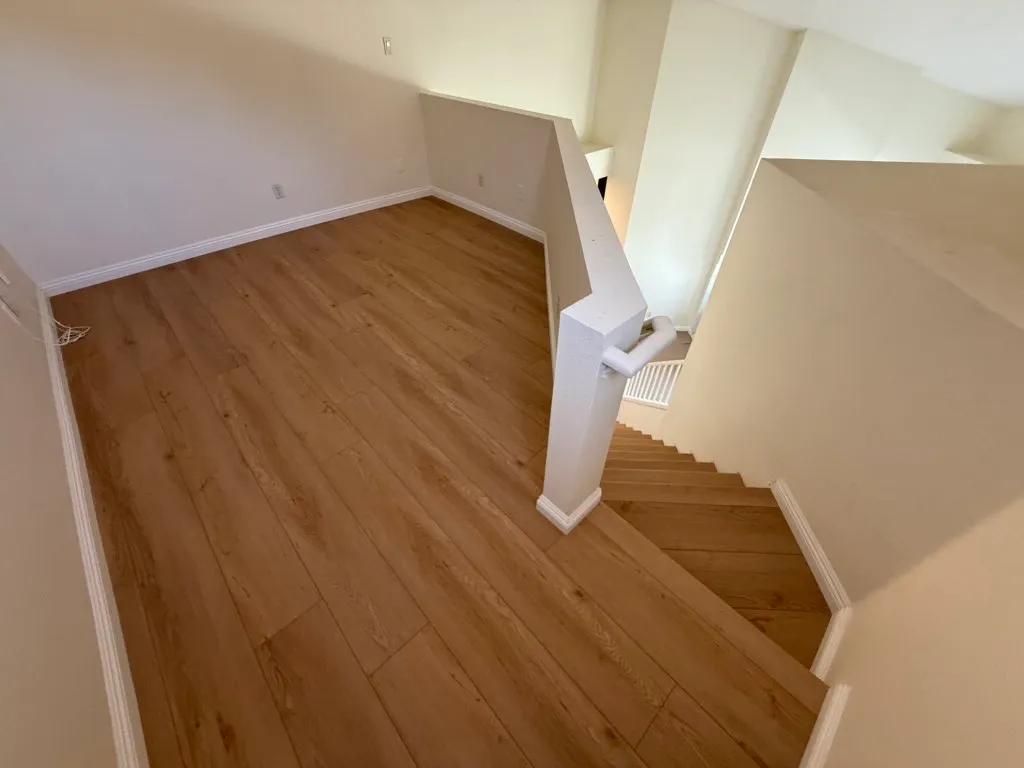
Paint the room first, then install or refinish the floor, then do baseboard and trim touch-ups last. That order protects fresh paint from flooring debris and protects a brand new floor from paint drips, and it holds for almost every room renovation. New construction follows a longer, stricter trade sequence, covered in our flooring for new construction guide; this one is about repainting a room you already live in alongside new or refinished flooring.
This guide covers why that order exists, the one major exception (refinishing existing hardwood in place), how carpet timing is different from hard flooring, and how to protect both surfaces during the project regardless of which trade goes first.
Planning a room repaint alongside new flooring? Request a free in-home estimate or call +1 (619) 777-4334.
The Right Order for a Room Renovation
For a room in a home you already live in, the sequence that avoids the most rework is: paint walls and ceiling first (primer plus at least one finish coat), install or refinish the flooring second, then paint or touch up baseboards and trim last. Trim goes last because it needs to sit against the finished floor to cover the expansion gap and get a clean caulk line, and touching it up after the floor is down also covers any scuffs the flooring crew leaves behind during install.
This is a simpler version of the same logic new-construction crews follow (framing, drywall, paint, cabinets, flooring, then trim), just without the cabinet and drywall steps most renovations skip. If you are painting and flooring a room as part of a larger remodel that also involves cabinets or drywall work, our new construction sequencing guide covers the full order.
Why Painting Goes Before New Flooring
Painting is messier than most homeowners plan for, even with drop cloths down. Roller spatter, drips off a loaded brush, and paint tray spills happen on every job, and a floor that is already down when that happens either gets damaged or needs careful protection for the entire painting phase. Painting first means the floor underneath during that stage is either the old flooring being replaced anyway, or bare subfloor that does not matter if it gets a little paint on it.
Ladders and scaffolding for ceiling and high-wall work also put concentrated point-load weight and movement on whatever is underneath. Old carpet or a floor headed for demolition handles that fine. New hardwood, tile, or vinyl plank does not need that kind of traffic on it before it has even been used.
Should You Paint Before or After Refinishing Existing Hardwood?
This is the scenario homeowners ask us about most, since refinishing existing hardwood is not a new install, the same order still applies, just for a different reason. Sanding an existing hardwood floor kicks up a large amount of fine dust that settles on every surface in the room, including walls with paint that is still curing. Fresh paint that has not fully cured is more vulnerable to that dust embedding in the finish than paint that has been cured for a few weeks.
Paint the walls first, let the paint cure fully, then bring in the hardwood refinishing crew. If your painting and refinishing are being scheduled separately, we coordinate timing with your painting contractor so the sanding dust and the paint fumes and cure windows do not overlap and interfere with each other. Refinishing itself typically takes 3 to 5 days plus cure time, so building a short buffer after painting before refinishing starts is usually enough.
Paint Timing Is Different for Carpet
Carpet is the one flooring type where painting needs to be fully finished, trim and all, before the flooring crew shows up. Once carpet pile is down, a paint drip is far harder to fully clean out than off a hard floor, and carpet installers need finished baseboards to tuck and trim the carpet edge cleanly against. Scheduling a baseboard touch-up coat after carpet, the way you would with hardwood or tile, risks dripping paint into pile that a hard-surface floor would have simply wiped clean.
If you are replacing carpet in a room, get all painting, including trim, fully done and cured first, then schedule the carpet install as the very last trade in the room.
Protecting Fresh Paint During a Flooring Install
Even with paint finished and cured before flooring starts, a flooring install still puts material, tools, and foot traffic through a freshly painted room. A few things keep that from causing touch-up work later:
- Rosin paper or heavy paper flooring covers a subfloor or existing floor that will stay in place during demolition and material staging, keeping debris off baseboards.
- Low-tack painter's tape along the baseboard line protects the paint edge during nail gun work, adhesive spreading, or grout work near the wall.
- Keep the room ventilated and avoid leaning tools or material directly against a painted wall for at least the first week after painting, while the finish is still curing to full hardness.
When to Do Baseboard and Trim Touch-Up Paint
Baseboard and trim touch-up paint comes last, after the flooring is fully installed and any expansion gap is covered. This catches scuffs from the install itself, gives a clean caulk line where trim meets the new floor, and means the trim color match happens against the actual finished floor rather than guessing ahead of time. For hardwood refinishing specifically, budget for this touch-up coat even if the walls were painted well before the refinish, since edge sanding almost always leaves a few marks along the baseboard.
How Long Should Paint Cure Before Flooring Installation?
Wall paint should cure at least 5 to 7 days before flooring installation begins, longer in a room with poor ventilation or high humidity. Latex paint is usually dry to the touch within a few hours, but full cure, the point where the finish has hardened enough to resist scuffs and dust embedding, takes closer to a week. Starting a hardwood refinish or a flooring install before that window is up is the most common reason a fresh paint job ends up needing touch-ups sooner than it should.
Frequently Asked Questions
Should I Paint Before or After Installing New Flooring?
Paint before installing new flooring in almost every case. Painting first protects the new floor from drips and ladder traffic, and the floor being replaced or the bare subfloor underneath does not need the same protection during the messier painting phase.
Should I Paint Before or After Refinishing Hardwood Floors?
Paint first, then let it fully cure before refinishing starts. Sanding an existing hardwood floor creates fine dust that settles on walls, and dust embeds more easily in paint that has not fully cured yet than in paint that has had a week or more to harden.
Does Carpet Installation Need to Happen After All Painting Is Done?
Yes, including trim touch-ups. Once carpet pile is down, a paint drip is much harder to clean out than off a hard floor, and carpet installers need finished baseboards to trim the edge against cleanly. Finish all painting before scheduling a carpet install.
How Long Should Paint Cure Before Flooring Goes In?
Plan for at least 5 to 7 days of cure time after the final coat before flooring installation or hardwood refinishing begins, longer in a poorly ventilated or humid room. Paint that is dry to the touch is not the same as paint that has fully cured and hardened.
Do Baseboards Get Painted Before or After New Flooring?
Baseboard touch-up paint happens after flooring installation, so it can cover any scuffs from the install and give a clean line against the finished floor and its expansion gap. An initial coat of primer and paint on new baseboards can happen earlier, but the final touch-up coat comes last.
Will a Hardwood Refinish Damage Fresh Paint?
It can, mainly through sanding dust settling on walls and edge-sanding equipment nicking baseboards, rather than from moisture or chemicals. Painting first and letting it fully cure, then protecting baseboards during the sand, keeps this risk low.
Is the Paint-Then-Flooring Order Different for a New Construction Home?
New construction follows a longer sequence: framing, drywall, paint or primer, cabinets, flooring, then baseboards and trim, since more trades are involved before flooring goes in. For a room renovation in an existing home, the shorter paint-then-flooring-then-trim order covered in this guide applies.
Can I Paint the Same Day Flooring Is Installed?
We do not recommend it. Fresh flooring, especially glued-down or finished-on-site hardwood, needs time to off-gas and cure without paint fumes or overspray in the room, and wet paint is easily damaged by material staging and foot traffic during an install. Space the two trades out by at least a few days.