
A home gym takes abuse no other room in the house does. Dumbbells get dropped, loaded barbells get set down hundreds of times a week, cardio machines vibrate for an hour at a stretch, and sweat hits the floor daily. Hardwood dents permanently under a dropped 45 lb plate. Tile cracks. Laminate chips at the seams. Carpet holds odor and does not survive burpees or rack pulls. Rubber is the one material built to take all of it and still look the same five years in.
We install rubber flooring for home gyms across San Diego County, matching thickness and product to how you actually train rather than selling one thickness to everyone. If you are updating floors elsewhere in the house at the same time, we also handle waterproof LVP and every other flooring type in the same visit. This guide covers thickness by activity, rolled rubber versus interlocking tile, the smell question nobody mentions until move-in day, and how to prep a cracked garage slab before rubber goes down.
Ready to floor your home gym? Request a free in-home estimate or call +1 (619) 777-4334.
Why Rubber Is the Best Flooring for a Home Gym
Most rubber gym flooring is made one of two ways: recycled styrene-butadiene rubber (SBR) ground from used tires and bonded with a polyurethane binder, or virgin EPDM rubber granules in color flecks bonded over a recycled base layer. Both absorb impact and rebound instead of transmitting shock straight into the slab and the framing below it, which is the main reason rubber outlasts every other flooring option in a room built around dropped weight and repetitive impact.
The impact absorption does double duty. It protects your equipment and your slab from cracking under repeated drops, and it cuts down the noise and vibration that travels to the rooms and floors around the gym, which matters if the space sits below a bedroom or next to a shared condo wall. Rubber is also slip resistant when wet from sweat, unlike tile or sealed hardwood, and it wipes clean with a damp mop instead of holding odor the way carpet does.
How Thick Should Rubber Flooring Be for a Home Gym?
Thickness is the single biggest decision in a home gym rubber project, and it should be set by what you actually do in the room, not by whatever is cheapest at the big box store. Going thinner than 3/8 inch on a slab is asking for trouble: the rubber flexes too much under impact and the slab underneath takes the hit instead, which over time can crack both the rubber and the concrete beneath it.
| Activity | Recommended Thickness | Why |
|---|---|---|
| Cardio and general fitness (treadmill, bike, bodyweight, yoga) | 3/8 inch (10mm) | Absorbs machine vibration and footfall noise, protects the slab, lowest cost per square foot |
| Free weights and dumbbells (up to about 100 lbs, benches, racks) | 1/2 inch (12mm) | Handles regular dumbbell set-downs without denting, adds standing comfort for long sessions |
| Olympic lifting and dropped barbells (bumper plates, deadlift platforms) | 3/4 inch to 1 inch (20-25mm) | Absorbs high-impact drops from overhead, protects slab and floor joists below |
You do not have to cover the whole room in the thickest option. A common approach in a mixed-use garage gym is 3/8 inch rolled rubber across the general floor area with a dedicated 3/4 inch to 1 inch platform pad, or stacked horse-stall mats, built only under the squat rack or lifting platform. That keeps material cost down while still protecting the slab where the heaviest drops happen. For anyone doing true olympic lifting, we generally build a proper platform: two layers of 3/4 inch rubber sandwiching a plywood core, set into the surrounding rolled or tile rubber so there is no lip to trip on.
Rolled Rubber vs Interlocking Rubber Tiles
Both formats come in the same thickness range, so the choice usually comes down to how permanent the gym is, how the room is shaped, and who is doing the install.
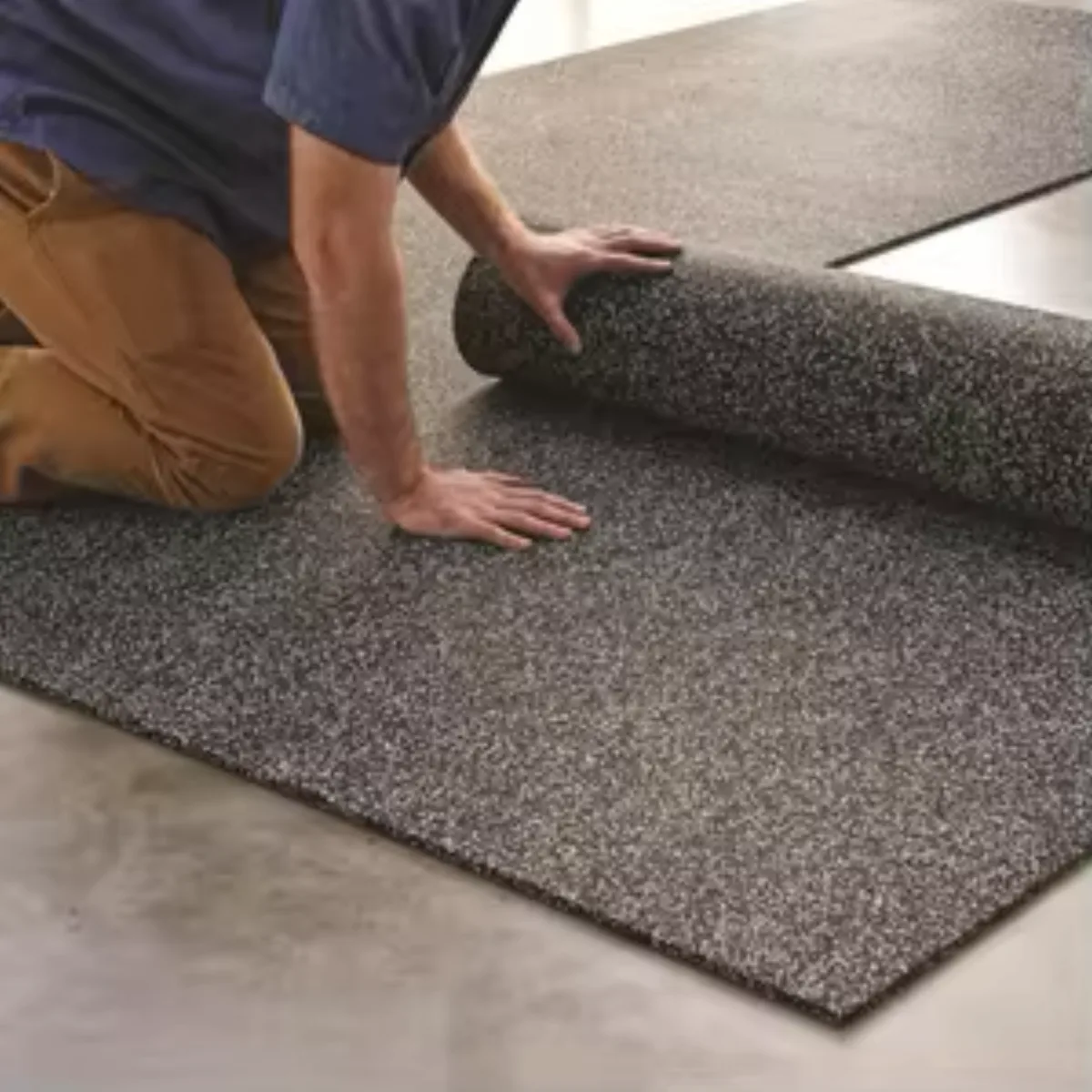
Rolled rubber ships in large rolls, typically 4 feet wide and 25 to 50 feet long, and gets set with full-spread adhesive or seam-taped for a continuous surface. It gives the most professional-looking result with the fewest seams, which also means fewer crevices where dust, hair, and sweat can collect. The trade-off is weight and handling. A 4 by 50 foot roll of 3/8 inch rubber weighs several hundred pounds, which is why we recommend a professional install rather than a DIY job for anything larger than a small room. If a section gets damaged years later, repairing it usually means cutting and patching a piece from the same roll run rather than swapping a single unit.
Interlocking tile comes in 20 by 20 inch or 24 by 24 inch squares with puzzle-piece edges, in the same 3/8 inch to 1 inch thickness range, and needs no adhesive for a garage or apartment setup. It is the more DIY-friendly option. One person can lay a few hundred square feet over a weekend, a damaged tile can be popped out and replaced individually, and renters can take the tile with them when they move. The trade-off is visible seams every 20 to 24 inches, and tiles can shift or curl at the edges over time if they are not glued down or weighted in place by heavy equipment like a squat rack.
| Feature | Rolled Rubber | Interlocking Tile |
|---|---|---|
| Best for | Permanent home gyms, full-room coverage | Renters, small rooms, DIY installs |
| Seams | Minimal, taped or fully bonded | Every 20 to 24 inches |
| Install | Professional install recommended, heavy material | DIY friendly, one person over a weekend |
| Repair | Cut and patch from matching roll stock | Swap a single tile |
Rubber Smell and Off-Gassing, What to Expect
Recycled tire rubber has a noticeable tire-like smell when it is new, and it will off-gas some volatile organic compounds (VOCs) for a period after installation. How long that smell lingers depends heavily on the product grade. Premium rubber that uses a virgin EPDM top layer over a recycled base, the kind of product made by brands like Ecore and Mondo, has a much lighter odor that generally clears within about a week with normal ventilation. Budget recycled tire tile, the cheapest option at any big box store, can keep smelling strongly for a month or longer in a closed-up room.
You can shorten that window regardless of which product you choose. Open windows or the garage door and run a box fan for the first week after install, avoid sealing the room up right away, and hold off moving in sensitive items like electronics equipment covers until the smell has faded. For general background on ventilation and indoor VOCs, the EPA's indoor air quality resources cover the basics of airing out a newly finished room. We tell every customer which grade of product they are getting and what smell timeline to expect before the order goes in, not after installation day.
Preparing a Cracked or Uneven Slab for Rubber Flooring
Most home gyms go into a garage or a converted room sitting directly on a concrete slab, and San Diego slabs, especially older ones, commonly have hairline shrinkage cracks. The good news is rubber is far more forgiving of a cracked or uneven slab than tile, hardwood, or laminate, but it still needs a real prep process, not just a quick sweep.
- Clean the slab. Oil stains, old adhesive residue, and paint overspray get scraped or degreased so the rubber (or its adhesive, if it is glued down) bonds properly.
- Measure crack width. Hairline cracks under about 1/16 inch generally do not telegraph through 3/8 inch rubber or thicker, so they can usually be floored over directly.
- Fill wider cracks. Cracks around 1/8 inch or wider, or any crack with one side sitting higher than the other, get filled with an epoxy crack filler and ground flush before rubber goes down. Left unfilled, that edge can eventually show through thinner tile and becomes a spot where dirt and moisture collect.
- Grind high spots. Rubber does not hide a raised area the way a soft carpet pad would, so any lippage at a crack or an old patch gets ground level first.
- Check moisture only if you are gluing down. Rubber itself is not moisture-sensitive the way wood or laminate is, so a loose-lay interlocking tile install can generally go over a slab with borderline high moisture readings without a vapor barrier. Full-spread adhesive rolled rubber holds up longer term when the slab is dry and properly sealed first.
We see this most often in garage conversions in inland San Diego neighborhoods like Poway, where older tract-home slabs have had decades to develop hairline cracking, but the same prep applies to any slab-on-grade home gym across the county.
Home Gym Rubber Flooring Cost by Thickness and Type
Costs below are fully installed, for a typical 300 square foot garage or converted-room home gym:
| Type and Thickness | Installed Cost/sqft | 300 sqft Total |
|---|---|---|
| 3/8" interlocking tile | $3.50 - $5.50 | $1,050 - $1,650 |
| 3/8" rolled rubber | $4.00 - $6.00 | $1,200 - $1,800 |
| 1/2" rolled or tile | $5.00 - $7.50 | $1,500 - $2,250 |
| 3/4" to 1" rolled or platform build | $6.50 - $10.00 | $1,950 - $3,000 |
Add roughly $3 to $6 per linear foot of crack if epoxy filling is needed, plus a modest grinding charge for any high spots. A typical 300 to 500 square foot home gym installs in 1 to 2 days including slab prep, versus a full week or more for a larger commercial gym buildout. Compared to tile at $8 to $18 per square foot or hardwood well above that, rubber is one of the more affordable flooring options per square foot, and it is the only one rated for dropped weight in the first place. Our free in-home estimate includes a slab inspection and an exact quote before any work starts.
Cleaning and Maintaining Rubber Gym Flooring
Rubber gym flooring is low-maintenance but not zero-maintenance. Sweep or vacuum first to clear grit and dust that can grind into the surface underfoot, then damp mop with a pH-neutral cleaner or a mild diluted dish soap. Avoid citrus-based cleaners, ammonia, and solvents. They break down the polyurethane binder over time and can leave the surface discolored or tacky.
Direct sunlight is the other long-term risk. Rubber left under a south-facing window or a garage door that stays open most of the day can fade from a deep black to a grayish tone over several years. If your gym gets a lot of direct sun, closing blinds during peak hours slows that fade considerably. Under permanent equipment like a squat rack or a fixed platform, adding an extra rubber mat or furniture pads spreads out point-load wear so the base flooring does not compress unevenly at the feet of the equipment. If a tile corner or a seam starts to lift, re-adhering it with contact cement right away is a five-minute fix. Left alone, a lifted edge curls further and becomes a tripping hazard.
Frequently Asked Questions
What Thickness of Rubber Flooring Do I Need for a Home Gym?
3/8 inch is the standard for cardio equipment and general fitness use. 1/2 inch is the right call for regular free-weight and dumbbell training. 3/4 inch to 1 inch is what you need for olympic lifting and dropping loaded barbells, since thinner rubber cannot absorb that level of impact without stressing the slab underneath.
Should I Choose Rolled Rubber or Interlocking Tiles for My Home Gym?
Rolled rubber is the better long-term choice for a permanent home gym since it has the fewest seams and the most professional finish. Interlocking tile is the better choice if you rent, want to install it yourself over a weekend, or want the option to replace a single damaged section instead of a larger area.
Will Rubber Gym Flooring Smell When It Is Installed?
Yes, briefly. Recycled tire rubber has a noticeable smell that generally clears within a month with ventilation, and can linger longer in a closed-up room. Premium virgin-rubber products from brands like Ecore and Mondo have a much lighter smell that typically airs out within about a week.
Can I Install Rubber Flooring Over a Cracked Garage Slab?
Yes. Hairline cracks under about 1/16 inch generally do not telegraph through 3/8 inch rubber or thicker. Wider cracks, or cracks with one side higher than the other, get filled with epoxy and ground flush first so the rubber sits flat and the crack does not become a wear point.
How Much Does Rubber Flooring Cost for a Home Gym?
A 300 square foot home gym typically runs $1,050 to $3,000 fully installed depending on thickness and whether you choose interlocking tile or rolled rubber, with 3/8 inch tile at the low end and a 3/4 inch to 1 inch platform build at the high end.
How Long Does It Take to Install Rubber Flooring in a Home Gym?
A typical 300 to 500 square foot home gym, including any slab crack repair, installs in 1 to 2 days. Larger commercial gym buildouts with multiple zones take longer, often a week or more.
Can Rubber Flooring Go Over Carpet or an Existing Hard Floor?
We recommend removing carpet first since it compresses unevenly under rubber and traps moisture underneath. Rubber can generally go directly over existing tile, laminate, or vinyl as long as that floor is flat, well-bonded, and not already damaged or lifting.
How Do I Clean and Maintain Rubber Gym Flooring?
Sweep or vacuum first, then damp mop with a pH-neutral cleaner. Avoid ammonia, citrus cleaners, and solvents, which break down the rubber's binder over time. Keep it out of prolonged direct sunlight where possible to slow fading, and re-adhere any lifted seam or tile edge as soon as you notice it.