Daycare flooring has to pass a safety inspection, not just look clean. A play area floor gets judged on fall-height attenuation, a classroom floor on cleanability and disinfection, and both get reviewed as part of licensing, not just left to the operator's preference. We install rubber flooring for daycares and play areas across San Diego, and we provide the fall-attenuation compliance documentation licensing inspectors and insurers ask for.
This guide covers what ASTM F1292 actually tests, how to match rubber thickness to your play equipment's fall height, poured EPDM versus rubber tile for a childcare setting, cleaning and disinfecting rubber flooring around small children, and what California's licensing process expects from your flooring.
Opening or renovating a daycare? Request a commercial quote or call +1 (619) 777-4334.
Why Daycare Flooring Is Different From Residential Flooring
A residential rubber floor gets specified for comfort and durability. Daycare flooring for rubber flooring gets specified for a documented safety standard, because the person falling on it is a child, from playground equipment or from a standing height while running, and the surface has to actually reduce that impact, not just look soft. Play-area surfacing is tested and rated for fall-height attenuation under ASTM International's F1292 standard, and the U.S. Consumer Product Safety Commission's Public Playground Safety Handbook is the general reference most licensing agencies and insurers point to for playground surfacing guidance.
Indoor classroom and nap-room flooring has a different set of priorities: a smooth, seamless, easily sanitized surface that does not trap allergens or moisture, resists constant spills and cleaning cycles, and stays comfortable for children who spend a meaningful part of the day sitting or lying directly on it. Fall-rated rubber generally is not what goes down in a classroom; a thinner sealed rubber or a comparably easy-to-disinfect resilient surface is more typical there.
What ASTM F1292 Actually Tests
ASTM F1292 measures how much a surfacing material reduces the force of an impact, using instrumented drop tests that simulate a fall from a specific height onto the material. A surface is rated for the maximum fall height it protects at, so a piece of equipment with a 6-foot fall height needs surfacing tested and rated to perform at 6 feet, not surfacing that happens to be a few inches thick with no rating behind it. We supply the compliance documentation for the product installed, tied to the fall heights of the equipment in your play area, so it is on file before a licensing visit or an insurance walkthrough.
Fall height is measured from the highest point a child can stand, sit, or climb to on the equipment down to the surfacing below, not from the top of the structure itself. A play structure with a platform at 5 feet but a climbing point that reaches 7 feet needs surfacing rated for the 7-foot fall height, which is a detail that gets missed when surfacing is ordered off a general spec sheet instead of a walkthrough of the actual equipment.
Matching Rubber Thickness to Play Equipment Fall Height
Thickness requirements scale with fall height, and going thinner than the rated thickness for your tallest piece of equipment is the single most common compliance gap we find on daycare walkthroughs.
| Critical Fall Height | Typical Rated Rubber Thickness | Common Equipment |
|---|---|---|
| Up to 4 feet | 3/4 inch to 1 inch | Toddler climbers, low platforms |
| 4 to 8 feet | 1 inch to 1.5 inches | Standard play structures, slides |
| 8 to 12 feet | 1.5 inches to 2.5 inches, often poured EPDM | Larger climbing structures, tall slides |
These ranges vary by manufacturer and specific product, since two different rubber formulations can be rated for the same fall height at different thicknesses depending on density and how the material is engineered. We match the exact product and thickness to the manufacturer's tested rating for your equipment's fall height rather than estimating from a general chart, and we document that rating in the compliance paperwork we hand off after install.
Poured EPDM vs Rubber Tile for a Daycare
Poured-in-place EPDM surfacing is a granulated rubber base layer with a colored EPDM wear layer poured and troweled on site, cured into one seamless surface. It is the more common choice for taller fall heights and larger play areas because it has no seams for water or debris to collect in, it can be poured in a continuous color pattern or with painted graphics and games built into the surface, and it holds its fall rating evenly across the whole install with no seam weak points.
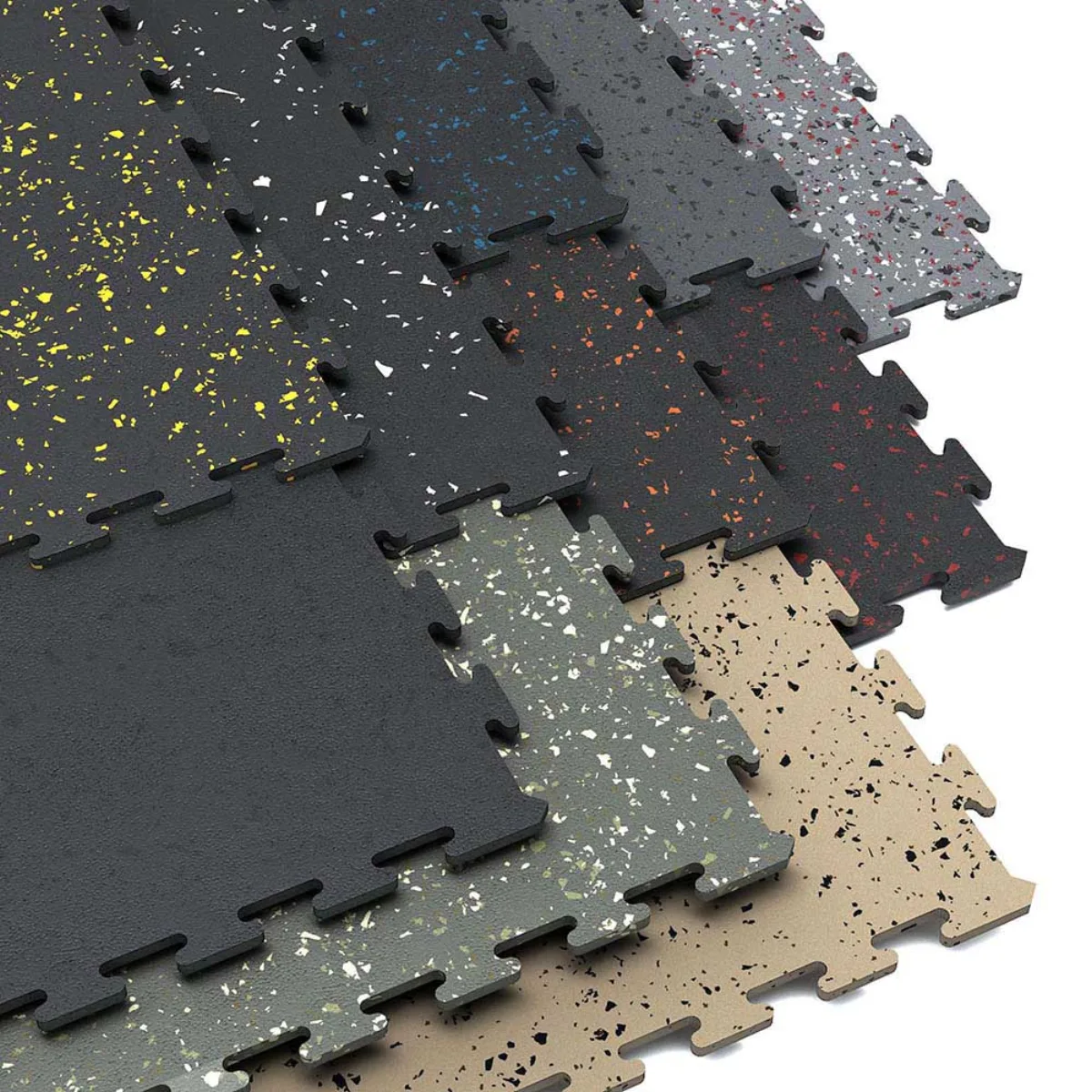
Rubber tile, in interlocking squares similar to the tile used in home and commercial gyms, is faster to install and easier to spot-repair since a single damaged tile can be swapped without redoing the surrounding area. It works well for smaller play areas and toddler zones with lower fall heights, and it costs somewhat less installed than a poured system. The tradeoff is seams that can allow moisture or debris to collect over time in an outdoor play area, which needs more routine seam inspection than a poured surface does.
| Feature | Poured EPDM | Rubber Tile |
|---|---|---|
| Best for | Taller fall heights, larger play areas, custom graphics | Smaller toddler zones, lower fall heights, budget-sensitive projects |
| Seams | None, fully bonded | Every 20 to 24 inches |
| Repair | Patch and re-pour a section | Swap a single tile |
| Color and design | Custom patterns, painted games, blended colors | Solid color per tile, limited pattern options |
Cleaning and Disinfecting Rubber Flooring in a Childcare Setting
Childcare flooring gets cleaned far more often than a typical commercial floor, and the cleaning products matter as much as the schedule. Daily cleaning is a sweep or dust-mop pass followed by a damp mop with a pH-neutral cleaner, and spot disinfecting through the day for spills and messes with a diluted, EPA-registered disinfectant appropriate for use around children. Avoid straight bleach solutions stronger than what the product label specifies for the surface, along with ammonia and solvent-based cleaners, all of which degrade rubber's binder over repeated use and can leave a tacky residue that attracts more dirt, not less.
Poured EPDM's seamless surface is the easier of the two formats to keep sanitary at scale, since there are no seam gaps for spilled milk, sand, or bodily fluids to work into. Rubber tile needs a closer eye on seam edges, since debris and moisture that gets into a seam gap is harder to fully clean out than a flat, poured surface. Either format holds up to a daily disinfecting routine far better than carpet, which is one of the reasons rubber and other resilient flooring dominates licensed childcare facilities over soft flooring in nearly every room except, occasionally, a quiet reading corner.
California Licensing and Permit Considerations
Child care centers in California are licensed through the Department of Social Services' Community Care Licensing Division, which reviews play area safety, including surfacing, as part of the licensing and renewal process. Requirements can vary by facility type and licensing category, so we recommend confirming the exact surfacing expectations with your assigned licensing analyst before finalizing a spec. What we can control on our end is installing to the manufacturer's tested fall-height rating and handing over documentation that supports whatever the inspector asks to see.
On the permit side, a straightforward resurface of an existing outdoor play area generally does not require a building permit in most San Diego County jurisdictions. Larger reconfiguration projects, such as adding new play structures, changing drainage, or expanding the play area footprint, may require a permit depending on scope and jurisdiction. We flag this during the site walk, before ordering material, so a permit requirement does not surface as a surprise mid-project.
What Documentation Do Inspectors Look For?
Inspectors and insurers generally want to see that the installed surfacing product is rated, by the manufacturer's own testing, for the fall height of the equipment it sits under, not just a general assurance that the floor is soft rubber. Owner Endri Zelollari, who has 13 years of journeyman flooring experience installing commercial and specialty surfaces across San Diego, provides the product spec sheet and fall-height rating documentation for every daycare install so it is on file and ready before a licensing visit, not scrambled together after an inspector asks for it.
Keep that documentation with your facility's licensing file, alongside the install date and any subsequent repairs or resurfacing, since inspectors may ask when a play surface was last serviced as well as what it is rated for. A poured EPDM surface that has been patched or partially replaced should have documentation for the patch material too, since a mismatched repair can create a weak point in the fall rating even if the original install was fully compliant.
How Much Does Daycare Rubber Flooring Cost?
Daycare play-area flooring costs $8 to $16 per square foot installed for poured EPDM, and $6 to $12 per square foot for rubber tile, with the range driven mostly by required thickness for your equipment's fall height and how much custom color or graphic work is included. Indoor classroom rubber flooring, which does not need fall-height rating, generally runs $5 to $9 per square foot installed.
| Area Type | Installed Cost/sqft | 1,500 sqft Play Area Estimate |
|---|---|---|
| Rubber tile, lower fall height | $6 - $12 | $9,000 - $18,000 |
| Poured EPDM, standard fall height | $8 - $16 | $12,000 - $24,000 |
| Indoor classroom rubber (no fall rating) | $5 - $9 | $7,500 - $13,500 |
These figures include material, install, and standard prep. A badly cracked or unlevel existing surface, drainage work, or removing an old asphalt or concrete play area first adds to the total and gets priced once we have walked the site. Our free commercial estimate includes a fall-height assessment of your existing or planned equipment and a written, zone-by-zone quote.
Frequently Asked Questions
What Flooring Is Required for a Daycare Play Area?
Daycare play areas need surfacing tested and rated under ASTM F1292 to match the critical fall height of the play equipment installed above it. This is typically poured EPDM rubber or rubber tile, with thickness increasing as fall height increases, generally from 3/4 inch for low toddler equipment up to 2.5 inches or more for taller climbing structures.
What Is ASTM F1292 and Why Does It Matter for Daycare Flooring?
ASTM F1292 is the industry test standard for how much a surfacing material reduces impact force during a fall from a specific height. It matters because licensing inspectors and insurers use it to verify that installed play-area surfacing actually protects at the fall height of your equipment, not just that the floor looks soft.
How Thick Should Rubber Flooring Be for a Daycare Play Area?
Thickness depends on the critical fall height of your tallest equipment: roughly 3/4 inch to 1 inch for fall heights up to 4 feet, 1 inch to 1.5 inches for 4 to 8 feet, and 1.5 inches to 2.5 inches or more, often poured EPDM, for 8 to 12 feet. Exact thickness varies by manufacturer and product density, so we match the manufacturer's tested rating to your equipment.
Is Poured EPDM or Rubber Tile Better for a Daycare?
Poured EPDM is generally better for taller fall heights, larger play areas, and custom colors or graphics, since it has no seams for water or debris to collect in. Rubber tile is a solid choice for smaller toddler areas with lower fall heights and costs somewhat less, but its seams need more routine inspection over time.
How Do You Clean and Disinfect Rubber Flooring in a Daycare?
Sweep or dust mop daily, then damp mop with a pH-neutral cleaner, and spot-disinfect spills through the day with a diluted, EPA-registered disinfectant safe for use around children. Avoid straight bleach beyond label directions, ammonia, and solvent-based cleaners, which degrade the rubber's binder and can leave a residue that attracts more dirt.
Do Daycares Need a Permit to Install New Flooring in California?
A straightforward resurface of an existing play area generally does not require a building permit in most San Diego County jurisdictions. Larger projects, like adding new play structures or changing drainage, may need one depending on scope and jurisdiction, which we flag during the site walk before ordering material.
What Documentation Do I Need for a Daycare Licensing Inspection?
Keep the manufacturer's product spec sheet and fall-height rating documentation for your installed surfacing on file, along with the install date and any repair or resurfacing history. We provide this documentation with every daycare install so it is ready before your licensing visit rather than assembled after an inspector asks for it.
Can Rubber Flooring Go Over an Existing Daycare Play Surface?
It depends on the condition of what is underneath. A sound, well-draining existing surface can sometimes support a new poured layer, but a cracked, sunken, or improperly draining base usually needs to be removed and corrected first so the new surfacing performs to its rated fall height across the whole area, not just where the base happens to be sound.
How Much Does Daycare Rubber Flooring Cost?
Daycare play-area flooring runs $6 to $12 per square foot installed for rubber tile and $8 to $16 per square foot for poured EPDM, depending on required thickness and design. Indoor classroom rubber flooring, which does not need fall-height rating, typically costs $5 to $9 per square foot installed.