
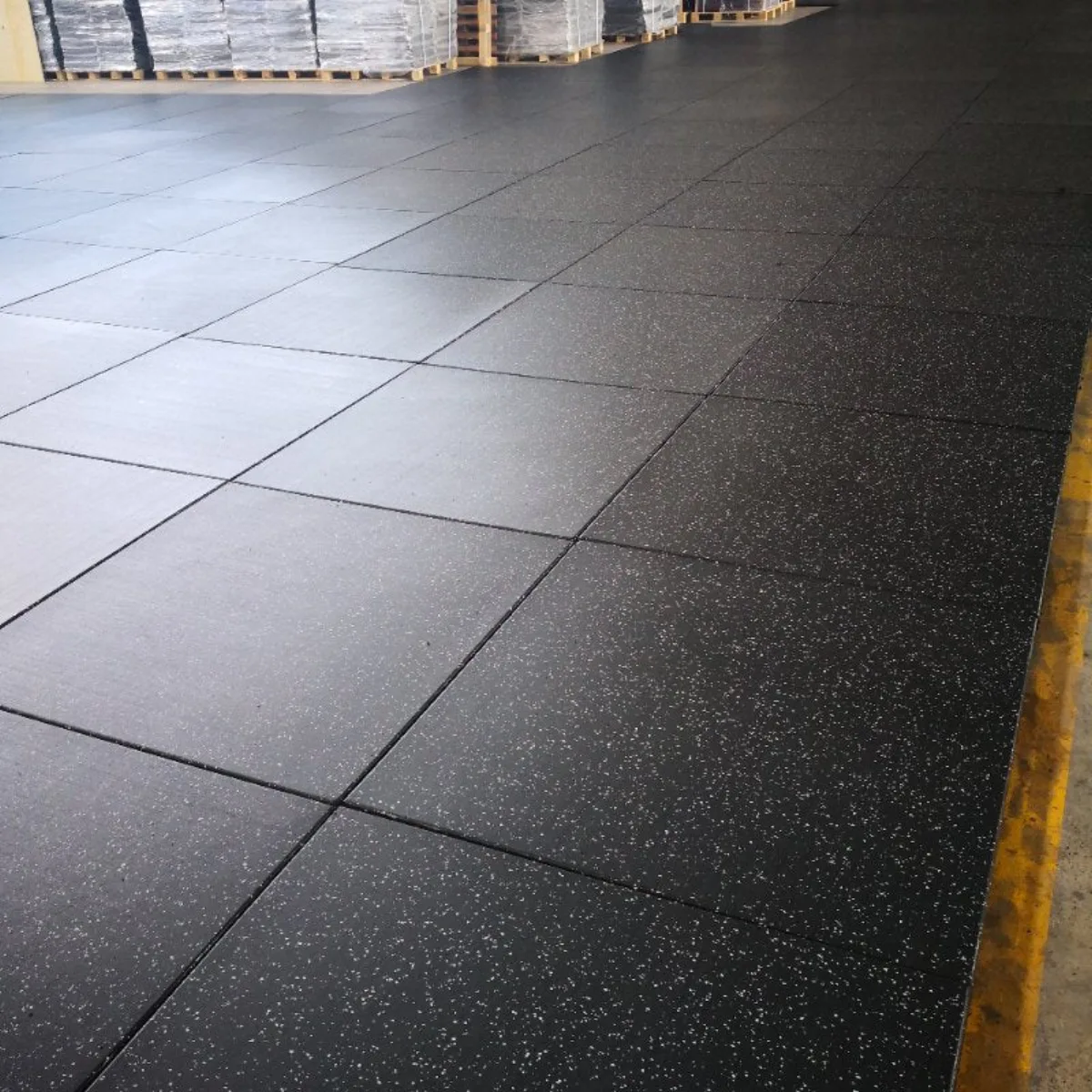
Commercial gym flooring is not one product spread wall to wall, it is several zones, each spec'd to what happens on it. A cardio floor, a free-weight area, and a locker room all take different abuse, and treating them the same either overspends on the cardio zone or underspends on the platform zone, where the real damage happens. We build commercial rubber flooring buildouts across San Diego for gym owners, general contractors, and facility managers who need the floor matched to the equipment going on top of it.
This guide covers how a commercial gym buildout is actually zoned, rolled rubber versus tile with heat-welded seams for high-traffic commercial use, how the major product lines compare, real cost per square foot, and how we schedule a buildout around a gym that needs to stay open.
Planning a gym buildout? Request a commercial quote or call +1 (619) 777-4334.
Why Commercial Gyms Standardize on Rubber
A commercial gym floor takes a different kind of load than a home gym: more square footage under constant use, rolling equipment moving across zones daily, and dropped weight happening dozens of times an hour during peak classes instead of occasionally. Rubber absorbs that impact and rebounds rather than transmitting shock into the slab, which protects both the concrete underneath and the framing or floor below if the gym sits on an upper level of a mixed-use building.
The other reason commercial operators standardize on rubber is liability. Slip resistance when the floor is wet from sweat or a mopping cycle, sound dampening between a weight room and an adjacent studio or office tenant, and a surface that does not chip, crack, or splinter under constant equipment traffic all reduce the everyday risk a facility manager has to manage. Athletic and commercial gym flooring is generally evaluated for impact and force-reduction performance under industry test methods published by ASTM International, the same standards body behind the fall-attenuation testing used for playground surfacing.
How a Commercial Gym Buildout Is Zoned
Specifying one thickness for an entire commercial gym almost always means overpaying somewhere. A typical buildout breaks into four or five zones, each with a different rubber spec:
| Zone | Typical Thickness | Why |
|---|---|---|
| Cardio zone (treadmills, bikes, ellipticals) | 3/8 inch (10mm) | Absorbs machine vibration, dampens footfall noise, lowest cost per square foot |
| Functional training / group class | 1/2 inch (12mm) | Handles kettlebells, medicine balls, and bodyweight impact across a large open floor |
| Free-weight zone (racks, benches, dumbbells to 100 lbs) | 1/2 inch to 3/4 inch (12-20mm) | Resists denting from regular dumbbell set-downs under sustained daily use |
| Platform / olympic lifting zone (bumper plates, dropped barbells) | 3/4 inch to 1 inch (20-25mm), often a built platform | Absorbs high-impact overhead drops without transmitting shock to the slab |
| Locker rooms and wet areas | Specialty slip-rated rubber or tile | Slip resistance and moisture tolerance take priority over impact absorption |
Platform zones get built as a distinct unit rather than blended into the surrounding floor: typically two layers of 3/4 inch rubber over a plywood or subfloor core, set flush with the surrounding rolled or tiled rubber so there is no trip-hazard lip between zones. In a multi-room facility, we walk every zone with the owner before ordering material, since the equipment plan usually changes the thickness math zone by zone.
Rolled Rubber vs Tile for Commercial Rubber Flooring
Both formats work in a commercial gym, but at commercial scale the seam question matters more than it does in a home gym. Rolled rubber ships in large format, commonly 4 feet wide by up to 50 feet long, and for commercial installs we heat-weld the seams rather than tape them. Heat welding melts a compatible weld rod into the seam under a hot-air gun, fusing two rolls into a single continuous surface with no gap for grit, sweat, or cleaning solution to collect in. On a floor getting mopped daily and rolled over with equipment, a taped seam eventually lifts. A heat-welded seam does not.
Tile, in 20 by 20 inch or 24 by 24 inch interlocking squares, is faster to install and easier to spot-repair (a single damaged tile pops out and gets replaced without touching the rest of the floor), which makes it a reasonable choice for functional-training zones with lower point-load traffic. The tradeoff at commercial volume is a seam every 20 to 24 inches across the whole floor, which is more surface area for grime to collect in and more edges that can lift under rolling equipment over time.
| Feature | Heat-Welded Rolled Rubber | Interlocking Tile |
|---|---|---|
| Best for | Platform zones, high-traffic cardio and free-weight floors | Functional training zones, phased buildouts, budget-sensitive projects |
| Seams | None visible, fully fused | Every 20 to 24 inches |
| Repair | Cut and weld a patch from matching stock | Swap a single tile in minutes |
| Install time | Longer, weld time adds to the schedule | Faster per square foot |
Comparing Commercial Rubber Flooring Brands
We install product from Ecore, Mondo, and Regupol on commercial jobs, and the three occupy different tiers rather than competing head to head on the same spec.
- Ecore builds its commercial lines from recycled rubber and post-consumer material, and it is a common spec for CrossFit-style boxes and multi-purpose training floors that need a durable, mid-to-premium surface without a fully custom platform build.
- Mondo is an Italian manufacturer best known in athletic and performance flooring circles, and its poured and sheet rubber systems show up frequently in dedicated platform zones and Olympic-style lifting areas where a seamless, color-consistent surface matters for a premium facility look.
- Regupol specializes in high-density recycled rubber built for heavy point loads, and it is a common choice for free-weight and platform zones specifically because of how well it holds up under repeated heavy dumbbell and barbell drops without permanent compression.
None of these is the automatic right answer for a whole facility. We typically spec a mid-tier product like Ecore across cardio and functional zones to control cost per square foot, and reserve Regupol or Mondo for the platform zone where the heaviest, most repetitive impact happens.
How Much Does Commercial Gym Rubber Flooring Cost?
Commercial gym rubber flooring costs $6 to $9 per square foot installed for general cardio and functional-training zones, and $8 to $14 per square foot for free-weight and platform zones requiring 3/4 inch to 1 inch rubber and heat-welded seams. A full multi-zone buildout usually blends both ranges depending on how much square footage goes into each zone.
| Zone Type | Installed Cost/sqft | 2,500 sqft Facility Estimate |
|---|---|---|
| Cardio / functional (60% of floor) | $6 - $9 | $9,000 - $13,500 |
| Free-weight / platform (40% of floor) | $8 - $14 | $8,000 - $14,000 |
| Typical blended total, 2,500 sqft | $6.80 - $11 | $17,000 - $27,500 |
That figure includes material, heat-welded seams where specified, and standard slab prep. It does not include crack repair on a badly damaged slab, moving or capping existing plumbing in a locker-room conversion, or custom logo inlays, all of which get priced separately once we have walked the space. Our free commercial estimate includes a slab inspection and a zone-by-zone written quote before any material is ordered.
Scheduling a Buildout Around an Operating Gym
Most of our commercial gym work is scheduled after hours, overnight, or across a weekend so the facility does not have to close during construction. A single-zone re-floor, like replacing a worn cardio area, typically fits into a closed overnight window or two. A full multi-zone buildout, 2,000 to 5,000 square feet across cardio, free-weight, and platform zones, generally takes 5 to 10 business days depending on how much of it needs heat-welded seams and whether slab crack repair is involved.
We work directly with general contractors on new-build gyms and with owners on renovations of an existing space, and we phase the work zone by zone where possible so part of the gym can reopen while another section is still being finished. Owner Endri Zelollari, who has 13 years of journeyman flooring experience and has run commercial buildouts across San Diego gyms and fitness facilities, walks every commercial project before the quote goes out so the schedule reflects the real condition of the slab, not a generic estimate.
Maintaining Commercial Rubber Flooring at Scale
Commercial rubber flooring is low-maintenance compared to a strip-and-wax program, but a facility running daily classes needs a real cleaning routine, not an occasional mop. Daily cleaning is a dust mop or auto-scrubber pass to clear grit before it grinds into the surface, followed by a damp mop or auto-scrubber cycle with a pH-neutral cleaner made for rubber flooring. Avoid citrus-based cleaners, ammonia, and solvent-based disinfectant wipes across the whole floor. They break down the rubber's polyurethane binder over time and can leave a tacky or discolored surface, even though a diluted, rubber-safe disinfectant is fine for spot-cleaning equipment contact points.
Heat-welded seams need essentially no ongoing attention since there is no seam to lift. Taped or glued tile seams should get a quick visual check monthly, since an early lifted corner is a five-minute fix with contact cement, while a corner left alone for months becomes a trip hazard and a bigger repair. Under permanent equipment like a squat rack or platform, an extra mat or rubber pad at the equipment's feet spreads out point-load wear so the base floor does not compress unevenly in the same spots year after year.
Frequently Asked Questions
What Is the Best Rubber Flooring for a Commercial Gym?
The best commercial gym flooring is zoned rather than one product throughout: 3/8 inch to 1/2 inch rubber for cardio and functional training, and 3/4 inch to 1 inch heat-welded rubber for free-weight and platform zones. Matching thickness to the zone controls cost while still protecting the slab where the heaviest impact happens.
How Much Does Commercial Gym Rubber Flooring Cost Per Square Foot?
Commercial gym rubber flooring runs $6 to $9 per square foot installed for cardio and functional-training zones, and $8 to $14 per square foot for free-weight and platform zones needing thicker rubber and heat-welded seams. A blended multi-zone facility usually lands between those two ranges depending on the square footage in each zone.
What Is the Difference Between Rolled Rubber and Rubber Tile for a Commercial Gym?
Rolled rubber with heat-welded seams creates a continuous surface with no gaps, which holds up best under daily rolling equipment and heavy foot traffic. Interlocking tile is faster to install and easier to spot-repair, but it has a seam every 20 to 24 inches, which is more surface area for grime and wear over time in a high-traffic commercial setting.
Why Do Commercial Gyms Use Heat-Welded Seams Instead of Taped Seams?
A heat-welded seam fuses two pieces of rubber into one continuous surface, which does not lift under rolling equipment or years of daily mopping. A taped seam is faster and cheaper to install, but on a commercial floor with constant traffic, taped seams eventually lift and become a trip hazard, which heat welding avoids.
How Long Does a Commercial Gym Flooring Buildout Take?
A single-zone re-floor often fits into one or two closed overnight windows. A full multi-zone buildout across 2,000 to 5,000 square feet typically takes 5 to 10 business days, depending on how much of the floor needs heat-welded seams and whether slab crack repair is required first.
Can You Install Gym Flooring Without Shutting the Gym Down?
Yes, in most cases. We schedule commercial installs after hours, overnight, or across weekends, and phase multi-zone buildouts so part of the facility can stay open while another zone is being floored. Tell us your operating hours and reopening date and we build the crew schedule around them.
What Thickness of Rubber Flooring Do Free-Weight Zones Need?
Free-weight zones with regular dumbbell and barbell use need 1/2 inch to 3/4 inch rubber. Dedicated olympic lifting platforms, built to absorb dropped bumper plates from overhead, need 3/4 inch to 1 inch rubber, often built as a distinct platform rather than blended into the surrounding floor.
Which Rubber Flooring Brands Are Used in Commercial Gyms?
We install Ecore, Mondo, and Regupol on commercial jobs. Ecore is a common mid-to-premium choice for general training floors, Mondo's poured and sheet systems suit dedicated platform zones and premium facility looks, and Regupol's high-density product is built specifically for heavy, repeated point loads like free-weight and platform zones.
Do Commercial Gyms Need a Permit for New Rubber Flooring?
A straightforward re-floor over an existing slab generally does not require a permit. Major reconfiguration work, such as moving walls, plumbing for a locker room, or structural changes as part of a new gym buildout, may need a building permit depending on scope. We flag this during the site walk before the quote goes out.