
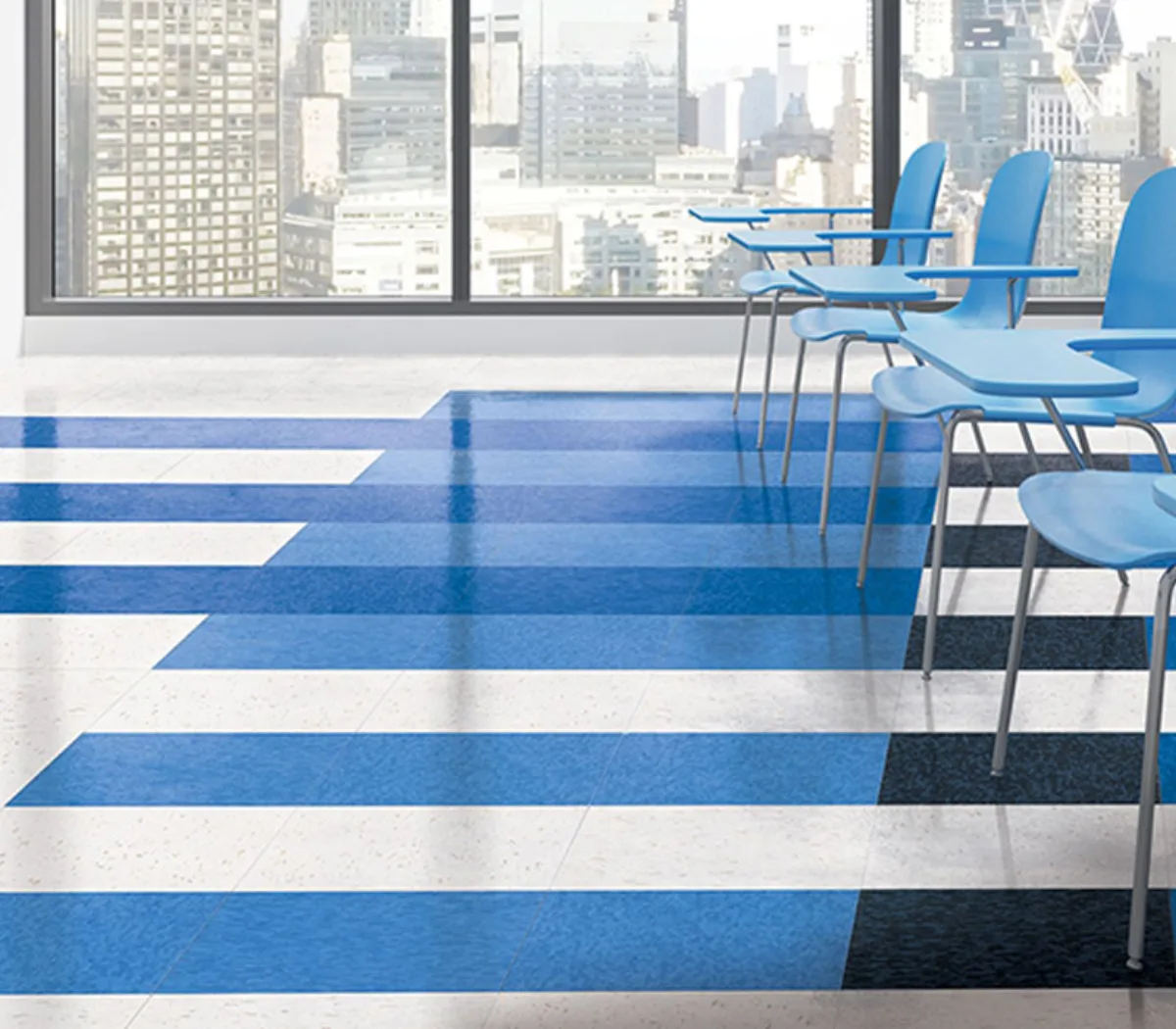
Vinyl Composition Tile (VCT) is the standard choice for classrooms, hallways, and cafeterias, while rubber flooring takes over in gyms and multipurpose rooms. Facilities managers choosing flooring installation for schools are usually balancing three things at once: upfront cost per square foot, how much staff time a maintenance program eats up over a 20-year building life, and whether a surface can survive rolling carts, chair legs, and a few hundred kids a day without looking wrecked by spring break. Our VCT flooring and rubber flooring installs across San Diego schools, districts, and daycare centers cover both ends of that equation.
This guide breaks down flooring installation for schools room by room, what a realistic maintenance budget looks like over the life of the floor, and the compliance details (slip resistance, ADA-compliant transitions) that get missed until an inspection flags them.
Planning a school or facility retrofit? Request a commercial quote or call +1 (619) 777-4334.
Why VCT Is the Institutional Standard
Vinyl Composition Tile has been the default flooring installation for schools, hospitals, and retail floors for decades, and the reasons are practical rather than aesthetic. VCT is a homogeneous tile of vinyl, limestone, plasticizer, and pigment, which makes it dense, heavy, and resistant to gouging from dragged furniture and rolling AV carts. A single damaged tile can be popped out and replaced without touching the surrounding floor, which matters when a district cannot afford to shut down a wing to fix one corner.
Cost is the other half of the equation. Standard VCT runs $3 to $6 per square foot installed at school volume, well below site-finished hardwood or porcelain tile, and well within most district capital plans. Properly maintained VCT lasts 20 to 30 years before it needs full replacement, according to the Resilient Floor Covering Institute, which is close to the usable life of the building systems around it.
Pattern flexibility is a real bonus for schools specifically. Color-bordered hallways for wayfinding, mascot inlays at building entrances, and quarter-turn or basket-weave layouts in common areas are all standard VCT capabilities, laid dry before adhesive so the design gets signed off before it is permanent.
Rubber Flooring for Gyms and Multipurpose Rooms
Gyms, weight rooms, and multipurpose rooms need a different set of properties than a classroom floor: impact absorption, sound dampening, and slip resistance when the surface is wet from mopping or sweat. Rubber flooring is built for exactly this. Rolled rubber in 3/8 inch to 1/2 inch thickness covers general PE and multipurpose use, while dedicated weight rooms and platform zones move up to 3/4 inch or 1 inch to handle dropped barbells without transmitting the impact into the floor slab or the room below.
For outdoor play areas and recess yards specifically, poured or tile rubber surfacing rated under ASTM F1292 for fall-height attenuation is the standard districts specify, since it is designed and tested for the fall heights of the play equipment installed above it, not just general foot traffic.
Rubber flooring for gyms costs more upfront than VCT, typically $6 to $12 per square foot installed depending on thickness and whether it is rolled, tiled, or heat-welded seams, but the maintenance load drops sharply. There is no strip-and-wax program to budget for, and commercial-grade rubber holds up for 20 or more years according to the Resilient Floor Covering Institute.
Classroom vs Hallway vs Cafeteria vs Gym
Not every room on a campus has the same flooring needs, and specifying one material campus-wide usually means overpaying in some rooms and underperforming in others.
| Space | Main Stress | Recommended Flooring | Installed Cost/sqft |
|---|---|---|---|
| Classroom | Chair legs, desk drag, moderate foot traffic | Standard VCT | $3 - $5 |
| Hallway | Highest foot traffic, rolling carts, wayfinding needs | VCT with color borders, thicker wear layer | $4 - $6 |
| Cafeteria | Spills, grease, daily heavy cleaning | VCT or quarry tile depending on kitchen adjacency | $4 - $7 |
| Gym / multipurpose | Impact, sound, slip when wet | Rolled or tiled rubber | $6 - $12 |
| Weight room / platform zone | Dropped barbell impact | 3/4" to 1" rubber | $8 - $14 |
Cafeterias sit in a gray zone worth calling out separately. Grease and acidic spills (ketchup, juice) degrade VCT finish faster than in a classroom, so districts that run a tight strip-and-wax schedule anyway often get better long-term results from porcelain tile near serving lines, with VCT continuing through the seating area where spills are lighter.
Maintenance Budget Realities for a School District
The sticker price on VCT is not the real cost. A new VCT floor needs 4 to 5 initial finish coats after installation, then a strip-and-rewax cycle every 12 to 24 months depending on traffic. High-traffic elementary hallways and cafeterias are usually annual; low-traffic administrative offices can stretch to 24 months.
A strip-and-wax service for a typical 20,000 square foot elementary school runs roughly $6,000 to $12,000 per cycle depending on labor rates and how many coats the contractor applies, which over a 25-year floor life adds up to a real recurring line item most capital plans account for but many maintenance budgets underestimate. Rubber flooring, by comparison, needs damp mopping with a neutral pH cleaner and essentially no recurring finish program, which is why districts increasingly specify it for gyms even though the upfront cost per square foot is higher.
Slip Resistance and ADA Compliant Transitions
Slip resistance is a real liability question in a building full of children moving fast between classes, especially near entrances, cafeterias, and gym doorways where floors get wet. VCT and rubber products both carry slip-resistance ratings, and finish choice matters as much as the base material. A high-gloss wax finish looks clean in photos but can reduce slip resistance when wet; many districts specify a slightly lower-gloss, higher-traction finish for entrances and cafeteria zones for this reason.
Transitions between flooring types (VCT hallway into a carpeted office, or VCT into a rubber gym entry) need to meet ADA thresholds, generally a maximum 1/2 inch height change with a beveled edge if it exceeds 1/4 inch. We plan transition strips and threshold details before ordering material so a change order does not appear mid-project.
What Flooring Is Best for High Traffic School Hallways
VCT with a color-bordered wayfinding pattern and a slightly lower-gloss, higher-traction finish is the best flooring for high-traffic school hallways. It costs $4 to $6 per square foot installed, holds up to rolling carts and daily foot traffic for 20 or more years, and a single damaged tile can be replaced without disrupting the rest of the hallway.
Frequently Asked Questions
What Is the Best Flooring for a School on a Tight Budget?
Standard VCT is the best flooring for a school on a tight budget. It installs for $3 to $5 per square foot, holds up to daily classroom and hallway traffic, and individual tiles can be replaced instead of an entire room. The tradeoff is a recurring strip-and-wax maintenance cycle every 12 to 24 months.
How Often Does School VCT Flooring Need to Be Stripped and Waxed?
Most schools need a strip-and-rewax cycle every 12 to 24 months. High-traffic elementary hallways and cafeterias are usually on the annual end of that range, while low-traffic administrative offices and rarely used rooms can stretch closer to 24 months without the finish looking worn.
Is Rubber Flooring Worth It for a School Gym?
Yes, for gyms, weight rooms, and multipurpose rooms specifically. Rubber costs more per square foot than VCT, $6 to $12 versus $3 to $6, but it absorbs impact, dampens sound, resists slipping when wet, and needs almost no recurring finish maintenance, which usually closes most of the cost gap over 15 to 20 years.
Can Old School VCT Flooring Contain Asbestos?
VCT installed before 1985 may contain asbestos in the tile itself or in the black cutback adhesive underneath it. Any renovation or demolition touching pre-1985 VCT should be tested first and coordinated with a licensed abatement contractor if asbestos is confirmed, per EPA guidance.
Do You Install School Flooring During the School Year?
Most of our school flooring work happens during summer break, winter break, or as phased weekend and after-hours installs in buildings that stay occupied. We build the schedule around the district's calendar, including full classroom turnovers completed before students return in the fall.
What Flooring Meets ADA Requirements for School Hallways?
Both VCT and rubber flooring meet ADA requirements when transitions are detailed correctly. The threshold rule is a maximum 1/2 inch height change between surfaces, with a beveled edge required once the change exceeds 1/4 inch. We plan every transition and threshold before material is ordered so it is compliant on day one.
What Thickness of Rubber Flooring Do Gyms Need?
General multipurpose rooms and PE use 3/8 inch to 1/2 inch rolled or tiled rubber. Dedicated weight rooms and free-weight platform zones need 3/4 inch to 1 inch rubber to absorb the impact of dropped barbells without transmitting it into the slab below.
How Long Does VCT Flooring Last in a School?
Properly maintained VCT lasts 20 to 30 years, according to the Resilient Floor Covering Institute. That lifespan depends on keeping up with the strip-and-rewax schedule; a floor that misses several maintenance cycles wears out faster and can need earlier full replacement.
What Flooring Should Go in a School Cafeteria?
VCT works for most school cafeterias, but the seating area and the serving line often benefit from different materials. Serving lines see heavier grease and acidic spills that wear VCT finish faster, so porcelain tile near the kitchen with VCT through the general seating area is a common, cost-effective split.