
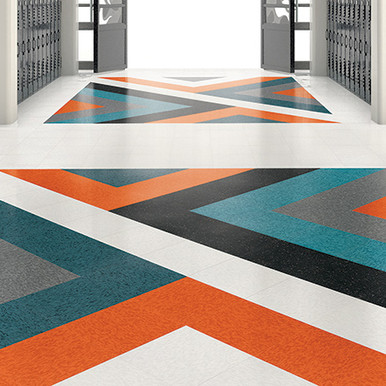
VCT and LVT are both resilient vinyl floors, but they are built differently and cost differently to own. VCT (Vinyl Composition Tile) is a solid, pigmented tile of vinyl, limestone filler, and plasticizer that needs a factory finish plus regular stripping and waxing to keep its shine. LVT (Luxury Vinyl Tile) is a layered product with a printed wood or stone image under a factory wear layer, and it never needs wax at all. The names sound alike and both are sold in similar tile sizes, but the two floors behave very differently once they are down.
We install both products across San Diego County, from school and healthcare buildouts to office and retail spaces, and homeowners converting a garage or laundry room. See our VCT flooring and luxury vinyl flooring service pages for what each install involves, and this guide breaks down the real differences in cost, maintenance, and where each one makes sense.
Comparing VCT and LVT for a project? Request a free in-home estimate or call +1 (619) 777-4334.
What Is VCT (Vinyl Composition Tile)?
VCT is a homogeneous tile, meaning the color and pattern run all the way through the full 1/8 inch (3.2mm) thickness of the material, not just printed on top. It is made from vinyl resin, limestone filler, plasticizer, and pigment, pressed into 12 inch by 12 inch tiles and glued down with adhesive over a prepared, flat subfloor. Because the color goes through the whole tile, light scratches and scuffs can be buffed out rather than showing bare substrate underneath, which is one of the reasons VCT has stayed a standard in institutional buildings for decades.
Out of the box, VCT is not shiny. Installers apply 4 to 5 coats of floor finish after installation to build the gloss and protective layer that gives VCT its familiar polished look. That finish wears down under foot traffic and needs to be stripped off and reapplied periodically, which is the maintenance tradeoff covered in detail further down this page. VCT is sold by major manufacturers including Armstrong Excelon, Mannington, Tarkett, and Roppe, and it remains one of the least expensive resilient flooring materials on a per-square-foot basis.
Installation requires a flat, clean substrate, typically within 3/16 inch of level over any 10-foot span, and a full-spread adhesive troweled across the subfloor before tiles are set and rolled. On slab-on-grade buildings, we run a moisture test before adhesive goes down, since excess vapor coming up through a slab can break the bond and cause tiles to lift or curl at the seams within the first year. Because VCT tiles are individually set rather than locked together, a damaged tile in the field can be popped up and replaced without disturbing the surrounding floor, which is a real advantage for a facility that keeps a box of matching spare tiles on hand.
What Is LVT (Luxury Vinyl Tile)?
LVT is a multi-layer product: a rigid or flexible core, a printed vinyl film with a photorealistic wood or stone image, and a clear urethane wear layer bonded on top at the factory. That wear layer is what takes the daily abuse, ranging from 6 to 12 mil on lighter residential-grade product up to 20 to 28 mil (or higher) on commercial-grade LVT built for offices, retail, and healthcare. Because the finish is baked in at the factory rather than applied on site, LVT never needs stripping or waxing, and it typically installs as 12 by 24 inch tiles or wider plank formats, though 12 by 12 inch LVT is also common where it needs to visually match an existing VCT layout.
LVT installs either glue-down (full-spread adhesive, the standard for commercial spaces and high-traffic residential rooms) or as a floating click-lock product, similar to the luxury vinyl plank (LVP) we install in homes throughout San Diego County. The tradeoff for LVT's low-maintenance wear layer is that once it wears through in one spot, usually from grit, furniture legs, or years of rolling traffic, the printed layer underneath is exposed and that tile cannot be buffed back to new. At that point the tile gets replaced rather than refinished.
Commercial glue-down LVT typically carries a manufacturer wear warranty of 10 to 20 years depending on the wear-layer thickness and traffic rating, while VCT's warranty usually covers material defects only, since its lifespan depends almost entirely on how well the finish is maintained rather than the tile itself failing. LVT also runs slightly quieter and softer underfoot than VCT because of its layered core, and it does not carry the same odor concern that stripping chemicals create during a VCT recoat, which matters in occupied buildings like hospitals and schools where the space cannot always be closed off for a full day.
VCT vs LVT Side by Side
Both are resilient vinyl floors that can look similar from across a room, but the construction differences below explain almost every practical tradeoff between them.
| Feature | VCT | LVT |
|---|---|---|
| Construction | Solid, color-through-body tile | Layered core, print, and wear layer |
| Standard thickness | 1/8 inch (3.2mm) | 2mm to 5mm |
| Finish | Applied on site, 4 to 5 coats | Factory wear layer, no on-site finish |
| Maintenance | Strip and rewax every 12 to 24 months | Dust mop and damp mop only |
| Scratch repair | Buffs out, color goes all the way through | Cannot be buffed once wear layer is breached |
| Installed cost | $2.00 to $4.00 per sq ft | $4.00 to $9.00 per sq ft |
| Appearance | Solid colors, speckles, marbling | Photorealistic wood and stone visuals |
| Common formats | 12x12 inch tile | 12x24 inch tile or plank widths |
| Spot repair | Pull and replace individual tile | Pull and replace individual tile or plank |
| Typical lifespan | 20 to 30 years with maintenance | 10 to 20 years, wear-layer dependent |
Both products are commonly specified with a slip-resistant finish or a lightly embossed texture for wet commercial areas like kitchen lines, locker rooms, and entryways, and manufacturers publish a slip-resistance rating on their spec sheets for facilities that have to document it for insurance or ADA purposes. Neither VCT nor LVT is a good fit for a shower or standing-water area; for full wet rooms we recommend porcelain tile, which is fully waterproof and rated for constant moisture in a way resilient vinyl tile is not.
Do VCT Floors Really Need Stripping and Waxing?
Yes, and this is the single biggest ongoing cost difference between the two floors. VCT's finish is a topical wax or acrylic coating applied after installation, and daily foot traffic dulls it, scuffs it, and eventually wears it down to the bare tile in high-traffic paths. Standard practice is 4 to 5 initial finish coats, then a full strip (removing the old finish with an alkaline stripper) and rewax every 12 to 24 months, with high-traffic schools and hospital corridors usually needing it annually and low-traffic offices able to stretch closer to 24 months. Skipping the cycle does not damage the tile itself, since the color is solid through the material, but the floor looks dull, gray, and dirty long before the tile is actually worn out.
LVT skips this cycle entirely. Its factory-applied urethane wear layer holds its shine and its scratch resistance without any topical coating, so daily care is dust mopping to remove grit and a damp mop with a pH-neutral cleaner. Facilities without an in-house janitorial staff trained on stripping and waxing, or that do not want the chemical smell and closed-floor downtime a strip-and-wax job requires, tend to prefer LVT for this reason alone, even though the tile itself costs more going in.
Stripping is also disruptive in a way LVT maintenance never is. An alkaline stripper has to sit and break down the old finish, gets mopped up and rinsed, then the floor needs to dry fully before new coats go on, so a strip-and-wax job on an occupied building is usually scheduled after hours or over a weekend to avoid foot traffic on wet finish and to let the ammonia smell clear before the space reopens. We schedule these jobs the same way we handle new VCT installs for schools and offices, working nights and weekends so the space is ready when staff or students arrive.
Which Costs Less Over the Life of the Floor?
VCT wins on day one. LVT often wins over 15 to 20 years once maintenance labor is added in. The table below shows a rough life-cycle comparison for a 2,000 square foot commercial space over 20 years, using the maintenance cadence and cost ranges above.
| Cost Category | VCT (2,000 sq ft) | LVT (2,000 sq ft) |
|---|---|---|
| Installed material and labor | $4,000 - $8,000 | $8,000 - $18,000 |
| Maintenance, 20 years | $4,800 - $18,000 (10 to 20 strip/wax cycles) | $0 (routine cleaning only, no wax) |
| Approximate 20-year total | $8,800 - $26,000 | $8,000 - $18,000 |
The exact break-even point depends heavily on traffic level and how disciplined a building's maintenance program actually is; plenty of VCT floors go years past their ideal recoat window with no ill effect beyond looking duller than they should. For a budget-constrained project with staff already used to maintaining VCT, like many school districts and public buildings we work with, the lower up-front cost still wins. For a building without dedicated custodial staff, or one where the appearance needs to stay consistently polished with minimal labor, LVT's higher install cost usually pays for itself in avoided maintenance labor within 8 to 12 years.
Which Commercial Spaces Favor VCT vs LVT?
The split mostly comes down to who is maintaining the floor and how much the space needs to look upscale.
| Space Type | Better Fit | Why |
|---|---|---|
| K-12 schools | VCT | Low upfront cost, custodial staff already trained on wax programs, easy custom color inlays for hallways and mascots |
| Hospitals and clinics, back-of-house | VCT | Low cost, quick individual tile replacement in utility and storage areas |
| Patient rooms and exam rooms | LVT | No wax odor, quieter, more residential feel where patients spend time |
| Corporate offices | LVT | Polished look without an on-site custodial wax program |
| Retail storefronts | LVT | Photorealistic wood or stone look matches higher-end brand standards |
| Big-box back-of-house / stockrooms | VCT | Cost per square foot matters more than finish in areas customers never see |
| Senior living and assisted living | LVT | Warmer, quieter, no wax chemical exposure for residents |
| Home laundry rooms or garages | VCT or LVT | Either works; VCT if a homeowner does not mind occasional waxing for the cost savings, LVT if they want to set it and forget it |
| Basements and rec rooms | LVT | Warmer and quieter for a room families actually spend time in, no wax maintenance to keep up with |
We also see VCT and LVT specified together in the same building. A school might keep VCT in classrooms and gym-adjacent hallways where resilient tile takes daily abuse, while the front office and library get LVT for a more polished, lower-maintenance look. Multi-tenant retail centers around San Diego and office buildouts in Carlsbad increasingly spec LVT throughout, since tenants change more often than a school district's classroom floors and a consistently polished look matters more to lease value than the up-front material savings.
Frequently Asked Questions
Is VCT the Same Thing as LVT?
No. VCT (Vinyl Composition Tile) is a solid tile made of vinyl, limestone filler, and pigment that needs an applied finish and regular stripping and waxing. LVT (Luxury Vinyl Tile) is a layered product with a printed wood or stone image under a factory wear layer that never needs wax. They can look similar in a photo but they are built and maintained completely differently.
Does VCT Need to Be Waxed?
Yes. VCT gets 4 to 5 finish coats after installation, then needs a full strip and rewax every 12 to 24 months depending on traffic. Skipping the cycle will not damage the tile since its color goes all the way through, but the floor will look dull and dirty well before the material actually wears out.
Is LVT Waterproof?
Yes, most LVT is fully waterproof at the surface thanks to its rigid or dense core and sealed seams, which is why it holds up well in kitchens, healthcare settings, and commercial restrooms. As with any resilient floor, a glue-down installation over a properly moisture-tested subfloor is what actually keeps water from reaching the substrate long term.
Which Is Cheaper, VCT or LVT?
VCT is cheaper to install, typically $2.00 to $4.00 per square foot versus $4.00 to $9.00 per square foot for LVT. Over a 15 to 20 year building life, VCT's ongoing strip-and-wax maintenance often closes that gap or exceeds it, so the cheaper floor on day one is not always cheaper over the life of the floor.
Can a Cracked or Scratched VCT Tile Be Fixed?
Individual VCT tiles can be pulled and replaced, and light surface scratches often buff out during a routine strip-and-wax cycle since the color runs through the full thickness of the tile. A cracked tile from impact damage needs full replacement, same as LVT.
Does LVT Ever Need Floor Finish or Wax?
No. LVT's wear layer is applied at the factory and is designed to hold its shine and scratch resistance without any topical coating. Routine care is dust mopping and damp mopping with a pH-neutral cleaner, no stripping or waxing required at any point in the floor's life.
Which Floor Lasts Longer, VCT or LVT?
Properly maintained VCT can last 20 to 30 years because it can be stripped, rewaxed, and buffed indefinitely. LVT typically lasts 10 to 20 years, limited by how long its factory wear layer resists traffic before the printed layer underneath starts to show through in high-wear paths.
Should I Choose VCT or LVT for a Home Instead of a Commercial Building?
For residential use, most homeowners are better served by luxury vinyl plank, which is essentially LVT in a plank format, since it needs no waxing and looks more like natural wood or stone. VCT is worth considering for a home garage, workshop, or laundry room where the lower material cost matters more than appearance and occasional waxing is not a burden.