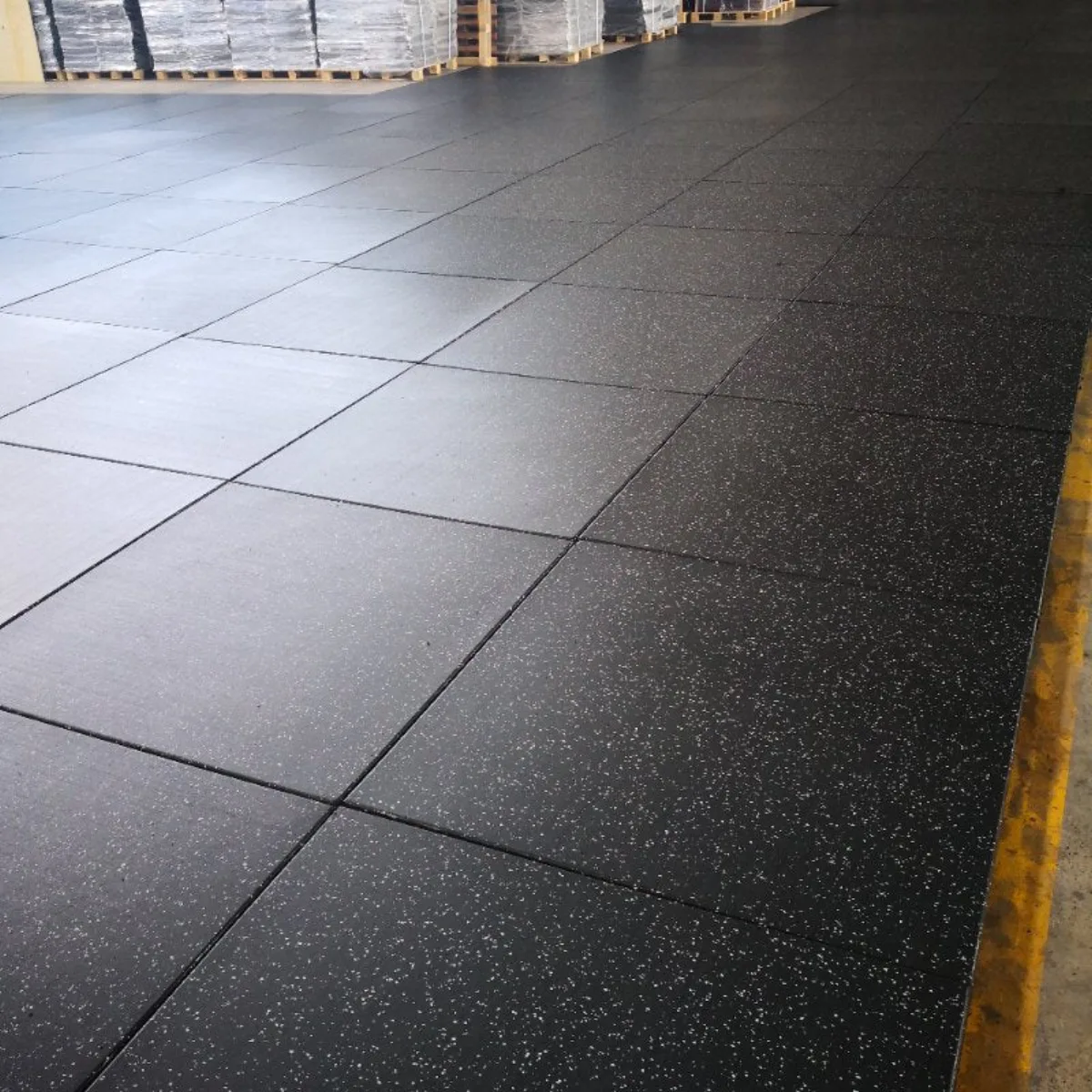
Rubber flooring is a resilient surface made from either recycled tire rubber (SBR) or virgin EPDM rubber, engineered to absorb impact and rebound instead of transmitting shock into the slab beneath it. It is the only common flooring material actually built to take a dropped barbell, a rolling piece of gym equipment, or a fall from playground height without cracking, denting, or transmitting that force straight through to the floor.
We install rubber flooring across San Diego for home gyms, commercial fitness facilities, garages, and daycare play areas. This guide explains what rubber flooring is actually made of, rolled versus tile format, where it makes sense and where it does not, and what it costs installed.
Considering rubber for a gym, garage, or play area? Request a free in-home estimate or call +1 (619) 777-4334.
What Is Rubber Flooring, Exactly?
Rubber flooring is a resilient, non-porous surface valued for one property above everything else: it compresses and rebounds under impact instead of transmitting that force through to whatever is underneath it. That single property is why rubber shows up in home gyms, commercial fitness facilities, garages, daycare play areas, and industrial floors, environments that all share the same problem of repeated impact, dropped objects, or standing fatigue that other flooring materials are not built to absorb.
Unlike a printed or engineered floor, rubber flooring's color typically runs through the full thickness of the material rather than sitting on top as a finish layer, which is why light surface wear does not expose a different-colored substrate the way a scratched laminate or vinyl plank does. It ships as rolled sheet, interlocking tile, or poured-in-place liquid rubber, covered in detail below.
SBR vs EPDM, What Rubber Flooring Is Actually Made Of
Almost all rubber flooring on the market today is made one of two ways, and knowing the difference explains most of the cost and smell questions people ask before buying.
- SBR (styrene-butadiene rubber). Ground from recycled tires and bonded together with a polyurethane binder, then often topped with a thin layer of color EPDM granules or left as solid black. This is the more affordable option, widely used in home gyms, garages, and general commercial flooring, and it carries a noticeable rubber smell when new that fades over roughly one to several weeks depending on ventilation.
- EPDM (ethylene propylene diene monomer). A virgin synthetic rubber manufactured specifically for flooring, sold as colored granules bonded into rolls, tile, or poured surfacing. EPDM costs more than recycled SBR but has a much lighter odor, holds color better under UV exposure, and is the standard material for daycare play areas and premium commercial installs where color consistency and low odor matter.
Many commercial and premium residential products blend the two: an SBR recycled base layer for cost and cushioning, topped with a thinner EPDM wear layer for color, UV stability, and a lighter smell. Brands like Ecore, Mondo, and Regupol, which we install on commercial jobs, generally follow this layered approach rather than using 100 percent virgin EPDM throughout, which keeps cost reasonable while still delivering the lighter odor and better color hold of a EPDM surface.
Rolled Rubber, Interlocking Tile, and Poured Rubber
Rubber flooring comes in three formats, and the right one depends on the size of the space, the budget, and who is doing the installing.
| Format | Typical Size | Best For |
|---|---|---|
| Rolled rubber | 4 ft wide, 25 to 50 ft long rolls | Home gyms, commercial gyms, and garages wanting the fewest seams and most professional finish |
| Interlocking tile | 20x20 or 24x24 inch squares | DIY installs, renters, small rooms, and spot-repair situations |
| Poured-in-place EPDM | Custom, troweled on site | Daycare play areas, custom commercial graphics, and taller fall-height requirements |
Rolled rubber gets heat-welded on commercial jobs or seam-taped on residential ones for a continuous surface with the fewest gaps for dirt and moisture to collect in. Tile is faster to install without adhesive, more DIY-friendly, and lets a single damaged piece be swapped without touching the surrounding floor. Poured rubber has no seams at all and can be formed into custom shapes, colors, and even painted graphics, which is why it dominates daycare and playground surfacing where a completely bonded, fall-rated surface matters most.
Rubber Flooring Pros and Cons
Pros of Rubber Flooring
- Real impact absorption. Rubber is the only common flooring material actually engineered to absorb dropped weight and repeated impact rather than just tolerate it.
- Slip resistant when wet. Rubber grips better than tile, sealed hardwood, or vinyl when the surface is wet from sweat, mopping, or rain tracked in.
- Sound and vibration dampening. Rubber absorbs footfall noise and equipment vibration, which matters in multi-level homes, condos, and mixed-use commercial buildings.
- Forgiving of an imperfect slab. Hairline cracks generally do not telegraph through 3/8 inch rubber or thicker, unlike tile or epoxy coating.
- Low ongoing maintenance. No stripping, waxing, or resealing required, just routine sweeping and damp mopping.
Cons of Rubber Flooring
- New rubber smell. Recycled SBR product has a noticeable odor that generally clears within a week to a month depending on ventilation and product grade.
- Higher upfront cost than some alternatives. Rubber often costs more per square foot than laminate, VCT, or a basic epoxy coating, though it typically needs less long-term maintenance.
- Limited design range. Rubber comes in solid colors, flecked patterns, and some poured custom graphics, but it does not replicate wood or stone visuals the way LVP or porcelain tile can.
- Can fade in direct sun. Extended direct sunlight, especially on darker SBR product, can fade rubber's color over several years.
Where Rubber Flooring Makes Sense, and Where It Does Not
Rubber is the right call anywhere impact absorption, slip resistance, or sound dampening is the actual priority: home and commercial gyms, garages and workshops, daycare and play areas, and industrial or backstage commercial spaces. It is generally not the right call for a finished living room, bedroom, or kitchen, where luxury vinyl plank or hardwood gives homeowners the visual warmth and design range rubber cannot match.
We get asked fairly often whether rubber is a good idea for a whole-home flooring project. Almost never, and we say so directly rather than selling a product that is the wrong fit. Rubber earns its keep in the specific rooms built around impact and activity, not as a general-purpose residential floor.
How Much Does Rubber Flooring Cost?
Rubber flooring costs $3.50 to $16 per square foot installed, and the range is wide because thickness, format, and use case all move the number independently. Thin residential tile sits at the low end; thick commercial platform rubber and fall-rated poured EPDM for play areas sit at the high end.
| Use Case | Installed Cost/sqft |
|---|---|
| Home gym (3/8" to 1") | $3.50 - $10.00 |
| Garage (3/8" to 3/4") | $3.50 - $9.50 |
| Commercial gym, cardio/functional zones | $6.00 - $9.00 |
| Commercial gym, free-weight/platform zones | $8.00 - $14.00 |
| Daycare play area (tile or poured EPDM) | $6.00 - $16.00 |
See our full rubber flooring cost breakdown for a deeper look at what drives price within each of these categories. Our free in-home estimate includes a slab inspection and an exact quote for your specific project before any material is ordered.
Frequently Asked Questions
What Is Rubber Flooring Made Of?
Rubber flooring is made from either recycled SBR (styrene-butadiene rubber) ground from used tires and bonded with a polyurethane binder, or virgin EPDM rubber manufactured specifically for flooring. Many products blend a recycled SBR base layer with a thinner EPDM wear layer for better color and lower odor.
Is Rubber Flooring the Same as Vinyl or VCT?
No. Vinyl and VCT are PVC-based products with a printed or applied wear layer. Rubber is an elastomeric material, meaning it compresses and rebounds under impact, which is a fundamentally different property than any vinyl-based flooring offers. That impact absorption is the whole reason rubber gets specified for gyms and play areas.
Does Rubber Flooring Smell?
Recycled SBR rubber has a noticeable smell when new that generally fades within about a week to a month with normal ventilation. Premium virgin EPDM products have a much lighter odor that typically clears within about a week.
What Is the Difference Between Rolled Rubber and Interlocking Tile?
Rolled rubber creates a more continuous, professional-looking surface with the fewest seams, and is generally installed professionally due to its weight. Interlocking tile is faster and easier to install without adhesive, more DIY-friendly, and lets a single damaged tile be replaced without disturbing the rest of the floor.
How Much Does Rubber Flooring Cost Per Square Foot?
Rubber flooring costs $3.50 to $16 per square foot installed, depending on thickness, format, and use case. Home gym and garage rubber sits toward the lower end, while commercial platform zones and fall-rated daycare surfacing sit toward the higher end.
Is Rubber Flooring Good for a Whole House?
Generally no. Rubber makes sense in rooms built around impact, activity, or safety, like gyms, garages, and play areas. For finished living space, most homeowners get a better look and more design range from luxury vinyl plank or hardwood.
How Long Does Rubber Flooring Last?
Commercial-grade rubber flooring typically lasts 20 or more years according to the Resilient Floor Covering Institute. Residential rubber in a home gym or garage generally holds up for a comparable span with routine cleaning and by keeping it out of prolonged direct sunlight.