
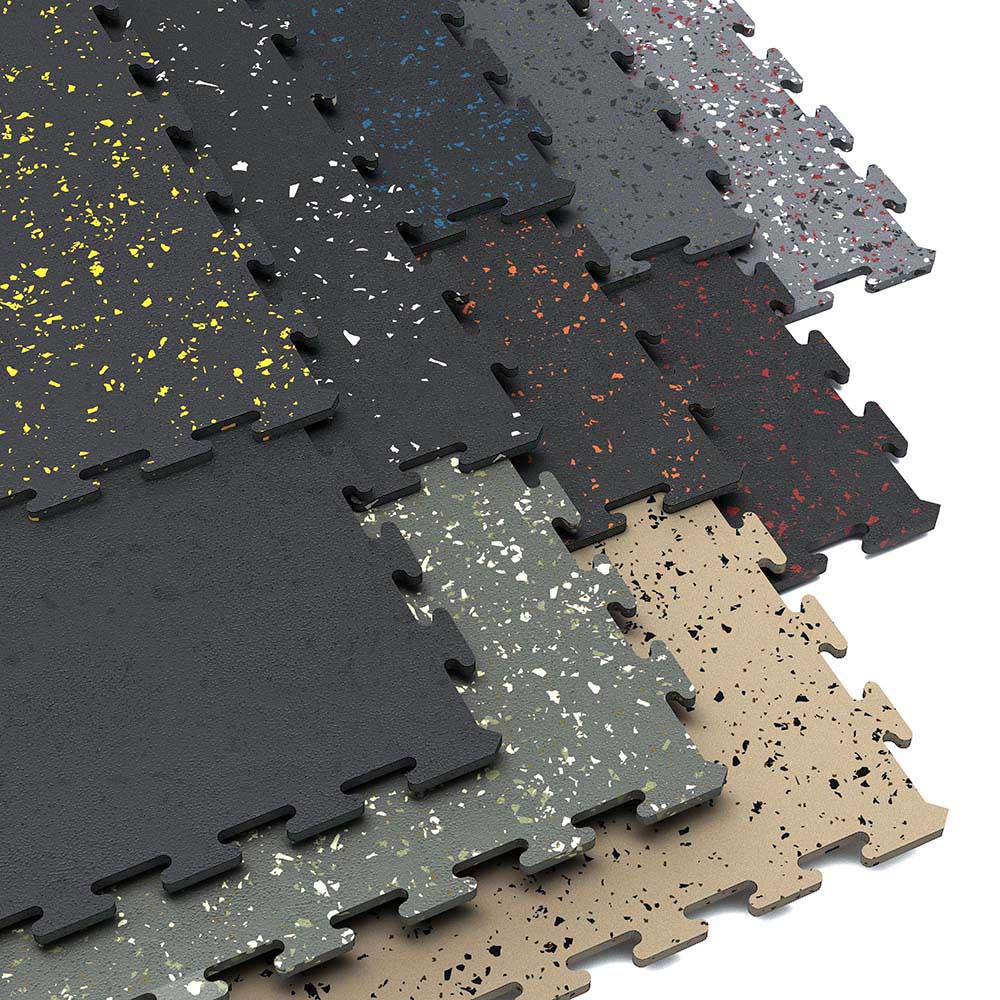
Rubber and VCT are the two most common commercial resilient floors, and they solve different problems. VCT (Vinyl Composition Tile) is a hard, mineral-heavy tile built for rolling loads and low material cost. Rubber is a soft, impact-absorbing surface built for dropped weight, sound dampening, and slip resistance. For a hallway or classroom, that makes VCT the obvious pick. For a gym, weight room, or play area, it does not, and a surprising number of facility managers still spec the wrong one for the room.
We install both rubber flooring and VCT across San Diego County, often in the same building. This guide breaks down where each one wins on cost, maintenance, comfort, and safety, so you spec the right material for the room instead of using whichever one is already on the rest of the floor plan.
Specifying flooring for a commercial project? Request a commercial quote or call +1 (619) 777-4334.
How Rubber and VCT Are Actually Built
VCT is roughly 85 percent ground limestone filler bound with vinyl resin, plasticizer, and pigment, pressed into a dense, hard 12x12 inch tile. It has no built-in wear layer, so every bit of its shine and scratch resistance comes from a topical acrylic finish applied after installation and maintained on a strip-and-wax cycle for the life of the floor.
Rubber flooring is made from recycled SBR tire rubber, virgin EPDM rubber, or a blend of the two, and it ships as rolled sheet, interlocking tile, or poured EPDM. Unlike VCT, rubber's performance does not depend on a topical finish. Its color runs through the material, and its impact absorption comes from the rubber compound itself, which is why it needs essentially no recurring finish program. See our full explainer on what VCT is made of for more detail on that side of the comparison.
Rubber vs VCT Side by Side
| Feature | Rubber | VCT |
|---|---|---|
| Construction | Elastomeric, SBR or EPDM rubber | Mineral tile, vinyl resin and limestone |
| Impact absorption | Yes, compresses and rebounds | No, hard and rigid |
| Finish required | None, color runs through the material | Yes, 4 to 5 coats applied on site |
| Maintenance | Sweep and damp mop | Strip and rewax every 12 to 24 months |
| Slip resistance when wet | High | Depends on finish gloss level |
| Sound dampening | Strong | Minimal, hard and dense |
| Installed cost | $6.00 - $14.00 per sqft (commercial) | $2.00 - $5.00 per sqft |
| Best rooms | Gyms, weight rooms, play areas, locker rooms | Hallways, classrooms, retail, offices |
Maintenance, Strip-and-Wax vs Sweep-and-Mop
This is the single biggest ongoing cost and labor difference between the two floors. VCT's topical finish wears down under foot traffic and rolling carts, and standard practice is a full strip and rewax every 12 to 24 months, more often in high-traffic corridors. Our VCT maintenance guide covers the full cycle, but the short version is that a facility needs either in-house custodial staff trained on stripping and waxing or a contracted service on a recurring schedule.
Rubber skips that cycle entirely. Daily care is a sweep or dust mop pass followed by a damp mop with a pH-neutral cleaner, the same routine regardless of whether the floor is 6 months or 15 years old. There is no chemical smell, no closed-floor downtime for stripping, and no recoat schedule to manage. For a facility without dedicated custodial staff, or one that cannot close a room overnight for a strip-and-wax job, that difference alone often settles the decision.
Impact Absorption and Slip Resistance
VCT has essentially no give. A dropped dumbbell, a rolling piece of gym equipment landing hard, or a child falling from playground equipment transmits full force straight through VCT into the slab and whatever is below it. Rubber compresses under that same impact and rebounds, which is the entire reason it gets specified for gyms, weight rooms, and play areas in the first place, and the reason athletic and playground surfacing performance gets tested under specific ASTM standards rather than left to a general durability rating.
Slip resistance follows a similar pattern. Rubber grips consistently when wet from sweat, mopping, or rain tracked in. VCT's slip resistance depends heavily on the gloss level of its finish, and a high-gloss wax that looks clean in photos can actually reduce traction when wet, which is why many facilities specify a lower-gloss, higher-traction finish specifically for entrances and locker rooms.
Cost Compared, Upfront and Over Time
VCT wins on day one every time. Rubber often closes that gap, or wins outright, once VCT's recurring maintenance is factored in for a room that actually gets high traffic.
| Cost Category | VCT (1,500 sqft) | Rubber (1,500 sqft) |
|---|---|---|
| Installed material and labor | $3,000 - $7,500 | $9,000 - $21,000 |
| Maintenance, 20 years | $3,600 - $13,500 (10 to 20 strip/wax cycles) | $0 (routine cleaning only) |
| Approximate 20-year total | $6,600 - $21,000 | $9,000 - $21,000 |
For a hallway or classroom that never sees dropped weight, VCT's lower upfront cost usually wins outright and the strip-and-wax cycle is a manageable, well-understood cost most facilities already budget for. For a gym or weight room, the comparison is not really about VCT's finish maintenance, it is that VCT is not rated for the impact those rooms take at all, which makes the cost comparison secondary to the safety and equipment-protection question.
Which Commercial Rubber Flooring Fits Which Room?
| Space | Better Fit | Why |
|---|---|---|
| Hallways and corridors | VCT | Low cost, individual tile replacement, high rolling-load durability |
| Classrooms and offices | VCT | Cost-effective for moderate foot traffic with no impact concerns |
| Gyms and weight rooms | Rubber | Impact absorption, sound dampening, slip resistance when wet |
| Locker rooms | Rubber | Slip resistance and comfort barefoot outweigh VCT's lower cost |
| Daycare play areas | Rubber | Fall-attenuation rating is a licensing requirement, not optional |
| Retail and lobby areas | VCT or LVT | Appearance and cost matter more than impact resistance |
We see both materials specified in the same building fairly often: VCT through the hallways and classrooms of a school, rubber in the gym and multipurpose room. Our school and educational facility flooring guide covers that exact split room by room, and our commercial gym flooring guide goes deeper on zoning a dedicated fitness facility by activity.
Frequently Asked Questions
Is Rubber or VCT Better for a Commercial Gym?
Rubber is the right choice for a gym. VCT has no impact absorption and can crack under dropped weight, while rubber is specifically built to compress and rebound under exactly that kind of repeated impact. VCT belongs in hallways, classrooms, and offices, not a weight room.
Which Is Cheaper, Rubber or VCT Flooring?
VCT is cheaper to install, typically $2 to $5 per square foot versus $6 to $14 per square foot for commercial rubber. Over 15 to 20 years, VCT's recurring strip-and-wax maintenance can close or exceed that gap in high-traffic rooms, though for low-traffic rooms VCT usually still wins on total cost.
Does Rubber Flooring Need to Be Stripped and Waxed Like VCT?
No. Rubber's color and performance come from the material itself, not a topical finish, so it needs only routine sweeping and damp mopping. VCT relies entirely on an applied acrylic finish that wears down and needs a full strip and rewax every 12 to 24 months.
Can VCT Be Used in a Home Gym Instead of Rubber?
We do not recommend it. VCT has no impact absorption and can crack under a dropped weight, defeating the purpose of a dedicated gym floor. Rubber costs more but is the only one of the two actually built to protect the slab and your equipment from repeated impact.
Which Is More Slip Resistant When Wet, Rubber or VCT?
Rubber is generally more slip resistant when wet, which is one reason it is standard in locker rooms and gyms. VCT's slip resistance depends heavily on the gloss level of its applied finish, and a high-gloss finish can actually reduce traction compared to a lower-gloss, higher-traction option.
Do Schools Use Both Rubber and VCT in the Same Building?
Yes, commonly. VCT typically covers classrooms and hallways for its low cost and durability against rolling carts, while rubber covers gyms and multipurpose rooms where impact absorption and slip resistance actually matter. Specifying one material campus-wide usually means overpaying in some rooms and underperforming in others.